By Suzan Edeh, Bauchi
Key stakeholders, government officials and development partners have officially reviewed and validated the Bauchi State’s domesticated Water, Sanitation, and Hygiene (WASH) Sector Monitoring and Evaluation (M&E) Framework to boost project sustainability and transparency.
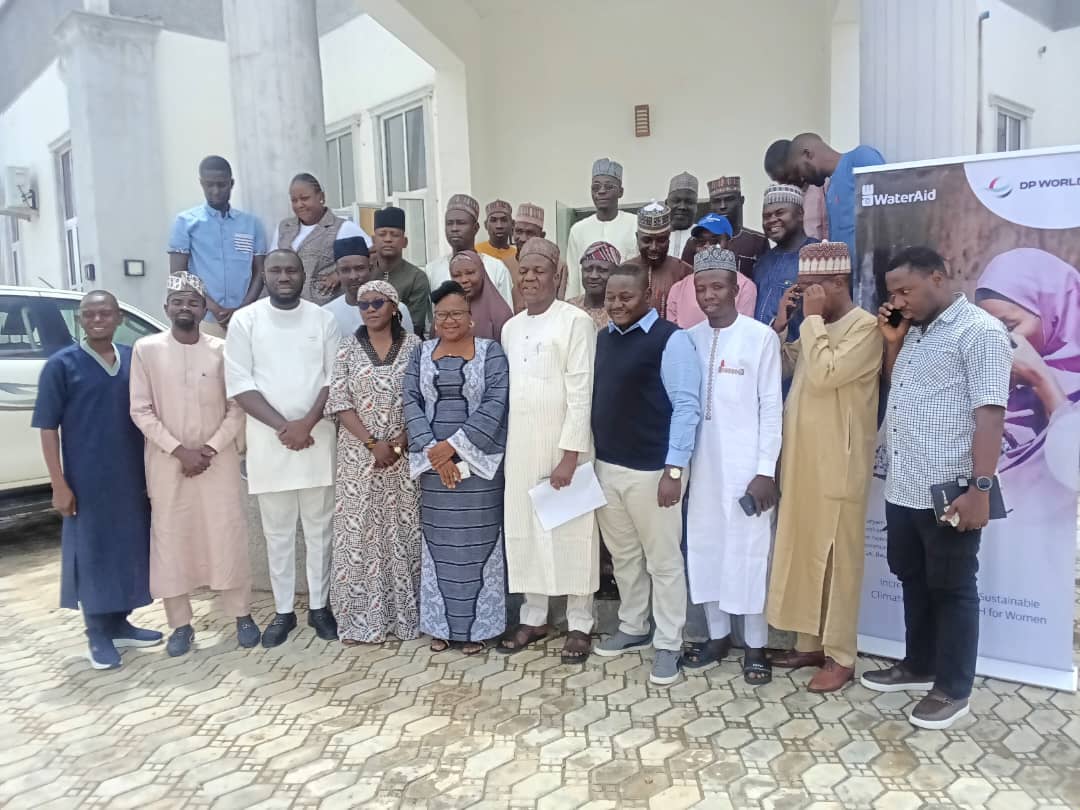
The validation workshop which was organized by WaterAid Nigeria in collaboration with its partners, took place at the Hazibal Hotel and Suites in Bauchi.
The Water, Sanitation, and Hygiene (WASH) Sector Monitoring and Evaluation (M&E) Framework aims to finalize a robust tracking system that aligns with the state’s newly reviewed WASH Policy, which currently awaits executive assent from the State Governor.
key objectives of the State Monitoring and Evaluation framework is to Coordinate and facilitate performance accessment across Water Sector MDAs as well as support evidence based decision making for policy formulation.
Speaking at the workshop, the Permanent Secretary of the Bauchi State Ministry of Water Resources, Samaila Muhammad Tela, described the framework as an essential roadmap for critical water interventions.
He emphasized that it establishes clear guidelines to measure project outcomes against key performance indicators.
“Without a plan, you cannot execute anything. We need Monitoring and Evaluation so that after project completion, we can verify if the expected indicators are met, if we are on track, and if we are maintaining strict accountability” Tela stated.
Tela noted that the framework is tailored to Bauchi State’s specific geographical and social needs, focusing on climate resilience for infrastructure, gender inclusivity for equitable access, community health outcomes and long-term infrastructure maintenance.
The WaterAid State Programme Lead, Mr. Mashat Mallo, explained that while the domestication process began a few years ago, it was intentionally paused to integrate emerging priorities from the updated state WASH policy.
He noted the priorities include climate change resilience, safely managed sanitation protocols, and gender mainstreaming.
Mallo highlighted that the institutional Monitoring and Evaluation framework came at a strategic time, as Bauchi State was recently enrolled in the World Bank-supported Sustainable Urban and Rural Water Supply, Sanitation, and Hygiene (SURWASH) programme.
He noted that the SURWASH initiative operates on a Program-for-Results (PforR) model, where funding is directly tied to verifiable delivery, stressing that having a functional M&E framework is a mandatory prerequisite for unlocking international development finances.
Mallo added that the framework will also empower the media and Civil Society Organisations (CSOs) to track targets, question progress, and demand government accountability using clear, standardized indicators.