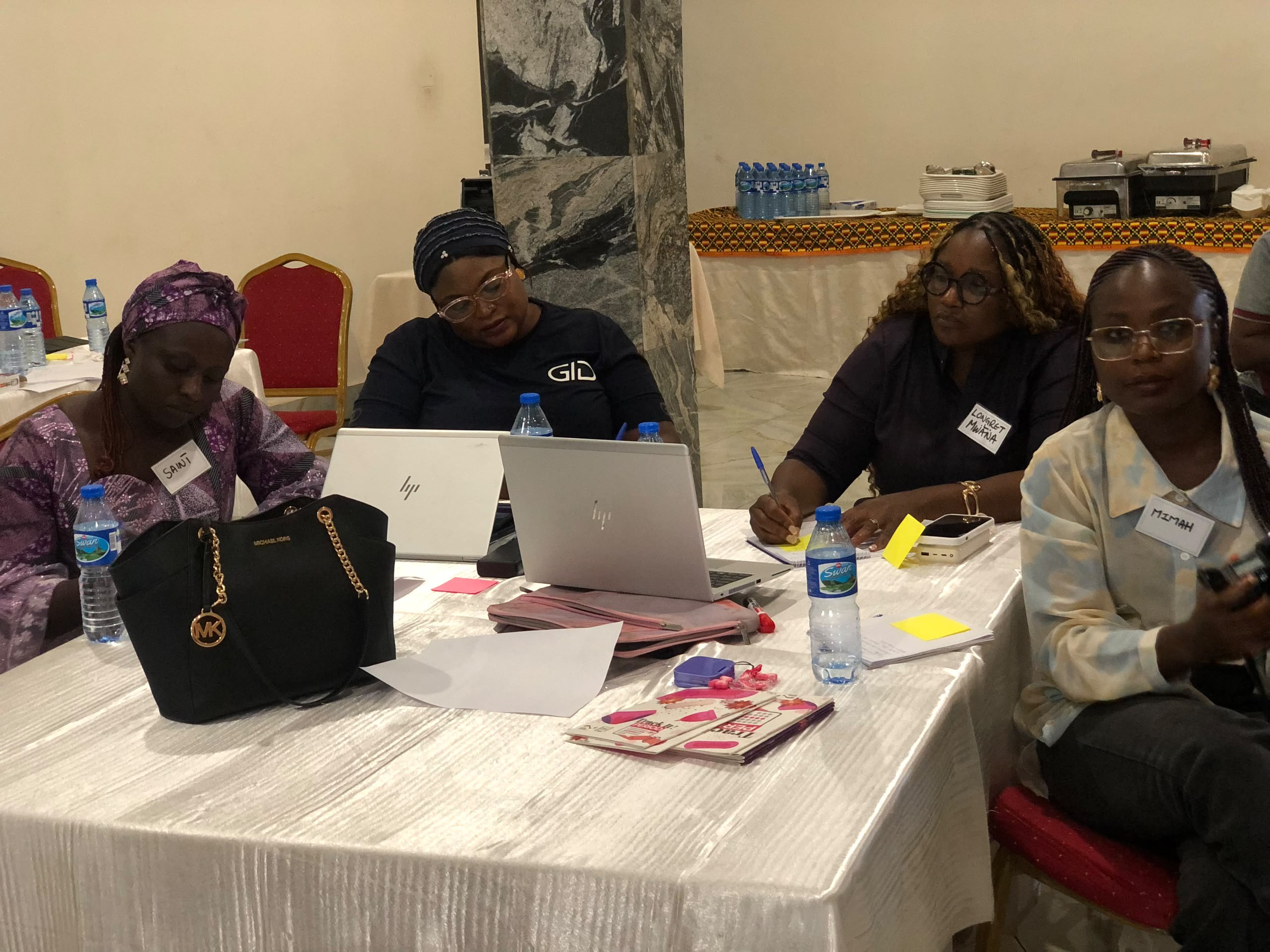
The Kaduna Business School, in collaboration with the Alliance for a Green Revolution in Africa (AGRA), has trained 95 Business Development Service Providers (BDSPs) to facilitate access to finance for agricultural Small and Medium Enterprises (agri-SMEs) in Nasarawa, Niger and Kaduna states.
Dr Ameh Omagwu, Project Manager, Systems Strengthening for the Provision of Business Development Services and Access to Finance for Agri-SMEs, disclosed this at an awareness and networking engagement for BDSPs and agri-SMEs in Lafia.
Omagwu said the project, tagged “Agri Revolution 2.0”, was designed to address the challenges faced by farmers and other actors in the agricultural value chain, particularly access to finance and markets.
He said the BDSPs were being trained to provide technical support to farmers and agri-SMEs, enabling them to understand and access appropriate financial products and markets.
“Our focus is on farmers because they have a lot of challenges in terms of access to finance and access to market.
“So, we are coming to support the BDSPs, and the BDSPs in turn will support the farmers so that they can have access to finance and markets,” he said.
Omagwu said the programme was targeting 300 BDSPs, adding that 95 had so far been trained from the three participating states.
He explained that the training lasted three weeks and covered generic knowledge of business development services, tools for identifying farmers’ challenges and a specialised curriculum for agricultural BDSPs.
According to him, the trainees also undertook field assignments and returned to share their findings on the challenges confronting farmers in the various states.
He said the programme had so far supported about 350 farmers involved in maize, rice and soybean production through grants, loans and capacity-building initiatives.
“There is no cost implication on the side of the SME. We have given grants to some beneficiaries to expand their businesses through the acquisition of equipment and infrastructure,” he said.
Omagwu said the programme was expected to run until 2028, adding that more BDSPs would be trained in subsequent phases.
He said the initiative was part of efforts to strengthen business development services in Nigeria, noting that the Kaduna Business School had previously trained about 2,000 generic BDSPs.
He explained that the National Business Development Service Provider Framework was developed in collaboration with the Small and Medium Enterprises Development Agency of Nigeria (SMEDAN) to professionalise business support services across the country.
Omagwu said Kaduna Business School was responsible for supporting the northern part of the country, while the Enterprise Development Centre of Pan-Atlantic University was supporting the southern region.
Mr Theophilus Raymond, Nasarawa Programme Officer, AGRA, said the organisation was collaborating with Kaduna Business School, SMEDAN and other partners to provide catalytic funding to address constraints affecting agri-SMEs.
Raymond said the initiative was expected to improve access to technical and financial resources, particularly for young women entrepreneurs in Kaduna, Niger and Nasarawa states.

Representing the Managing Director of Nasarawa Investment and Development Agency (NASIDA), Mr Ibrahim Abdullahi, the agency’s Vice President, Investment Promotion and Facilitation, Mr Abdullahi Ari, in a goodwll message, commended AGRA and its partners for the initiative.
Ari said NASIDA was committed to supporting SMEs, describing them as the backbone of the economy, and expressed the agency’s readiness to collaborate with the programme to improve access to affordable finance for businesses in the state.
Mr Uzoma Chikwendu, Agric Channels and Liability, First City Monument Bank (FCMB), said the engagement was designed to expose agri-SMEs to financial products and other support services available to them.
Chikwendu said financial institutions could provide more than financing, including business knowledge, networking opportunities and market linkages to help agricultural enterprises scale up.
Mr Anthony Acheme, Branch Manager, Bank of Agriculture (BOA), Nasarawa, said the bank had introduced several initiatives to address challenges confronting smallholder farmers, including inadequate funding and post-harvest losses.
Dr Donald Omenka, one of the newly trained agricultural BDSPs, said the training would enable him and his colleagues to bridge the information gap between farmers and financial institutions.
Omenka said the BDSPs would assist farmers with understanding available financial products, preparing required documents, keeping proper business records and developing business plans that met banks’ requirements.
He added that the BDSPs would also engage financial institutions on the need to develop products and conditions that were more suitable for farmers and other actors in the agricultural value chain.
Some beneficiaries, Mrs Joy Luka and Mrs Grace Samuel, said the programme had exposed them to information and practical guidance on how to access funding from financial institutions and expand their businesses. (NAN)