The Plateau State Ministry of Women Affairs and Social Development has intensified efforts to strengthen the implementation of the third Plateau State Action Plan (SAP), on United Nations Security Council Resolution 1325, as stakeholders met to validate Local Action Plans (LAPs) across three local government areas.
Following the unveiling of the third-generation State Action Plan on Women, Peace and Security, the Plateau State Government adopted proactive measures to ensure seamless implementation. This led to the constitution of a State Action Plan Implementation Committee (SAPIC) in collaboration with international and national partners.
The committee, supported by the Strengthening Peace and Resilience in Nigeria (SPRiNG) Programme and implemented by Tetra Tech International Development, with Women for Positive Peacebuilding Initiative (WOPPI) as implementing partner, holds quarterly meetings to review progress and receive feedback from local implementing partners.

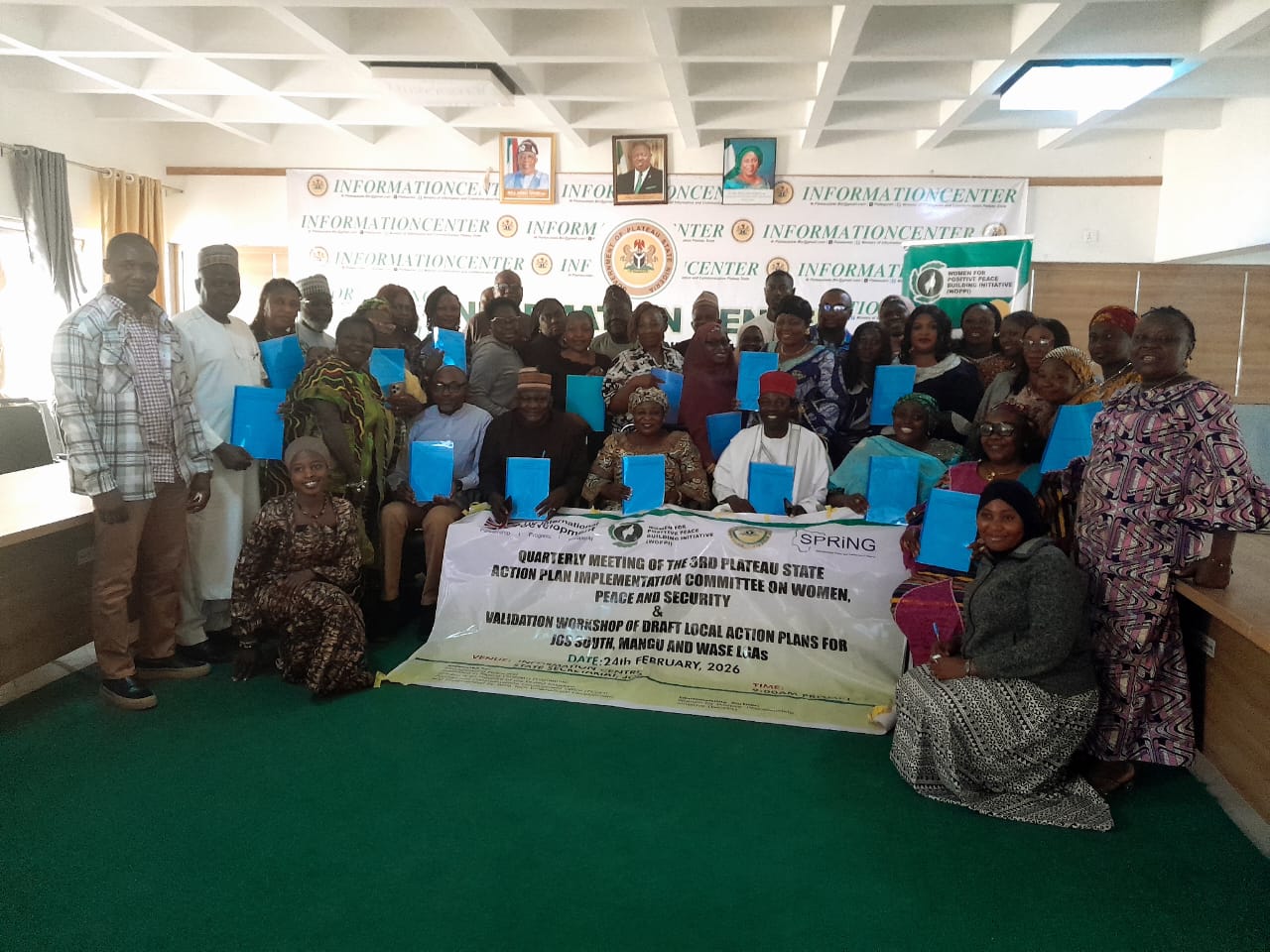
At the third quarterly meeting of the SAPIC held at the Information Centre, Plateau State Secretariat, participants validated Local Action Plans on Women, Peace and Security for Jos South, Mangu and Wase Local Government Areas.
Lead researcher, Dr. Sesan Peter of the University of Jos, explained that the Local Action Plans are derived from the State Action Plan and designed to create grassroots channels for women to report security threats, access support services, and actively participate in peacebuilding processes.
He observed that during conflicts, women often shoulder significant economic and social responsibilities, including caring for families, while also facing increased risks of sexual violence and displacement.

Executive Director of WOPPI, Lantana Abdullahi, noted that Plateau is among the few states implementing a third-generation State Action Plan. She said the current phase emphasizes practical implementation across five key pillars—prevention, protection, participation, relief, and recovery.
According to her, the validation process ensures that the Local Action Plans align with state policies while remaining inclusive, realistic, and budget-friendly for adoption by local governments.

Permanent Secretary of the Ministry, Barr. Rebecca Shasset, stressed that sustainable peace cannot be achieved without the meaningful involvement of women, describing them as critical agents of reconciliation and community resilience.
Participants also highlighted the need for increased public awareness of legal frameworks that support women’s protection, including the State Action Plan, the Violence Against Persons Prohibition (VAPP) Law, and the Gender and Equal Opportunities Law.

They expressed optimism that strengthening women’s leadership and protection mechanisms at the grassroots level would significantly enhance sustainable peace and security across Plateau State.
The validation session concluded with participants working in groups according to the three LGAs, Jos South, Mangu, and Wase, to examine issues based on the peculiar challenges and realities of each area.