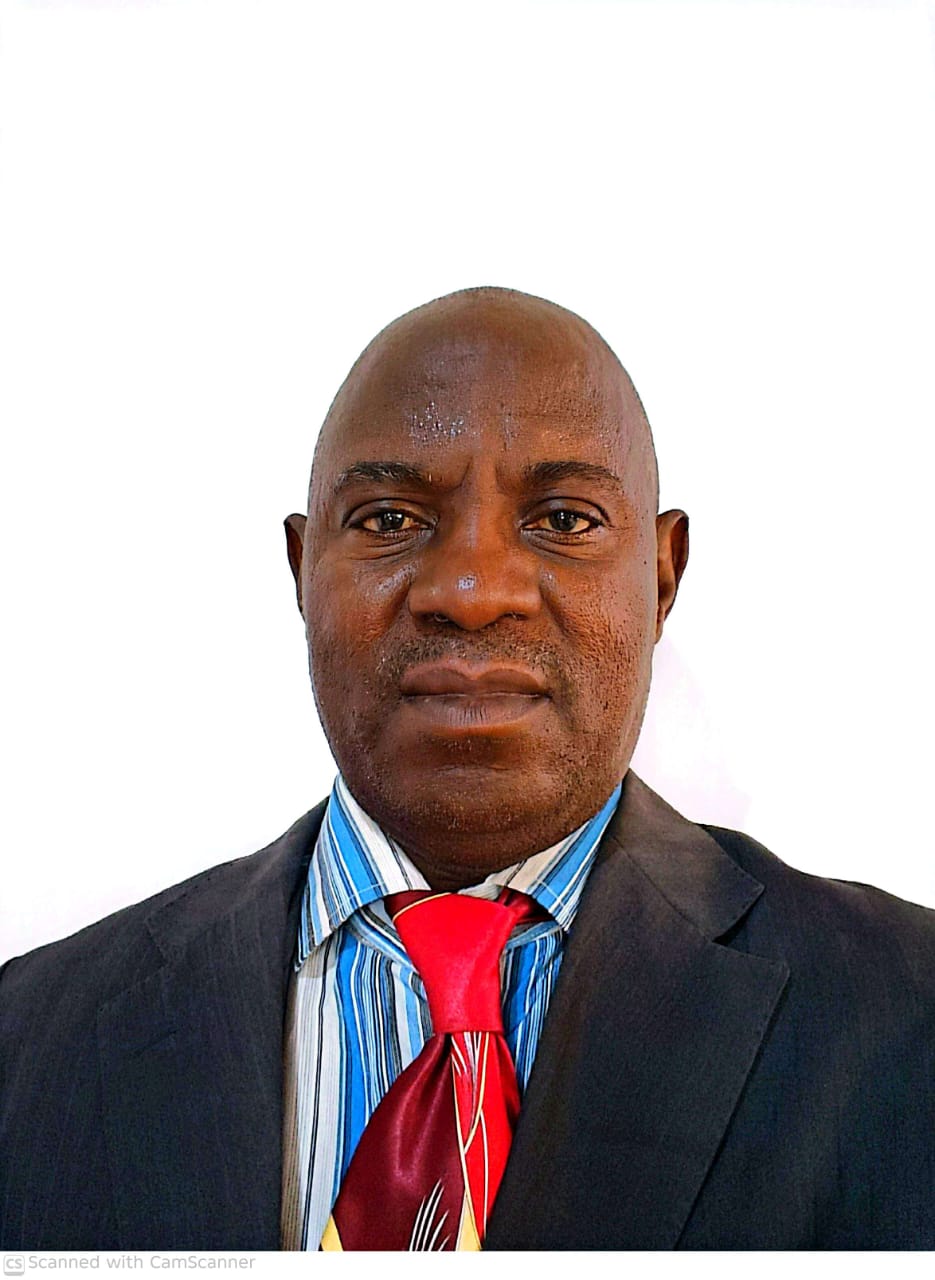
An Academic Summary by Professor Dakul Danaan Anthony, Dean Postgraduates School, University of Jos
Neglected Tropical Diseases (NTDs) remain one of the major public health and development challenges confronting Nigeria. Although these diseases are largely preventable and treatable, their persistence continues to affect the health, productivity and socio-economic wellbeing of millions of people. The inaugural lecture, titled “The Unholy Trinity Against the Elimination of Neglected Tropical Diseases in Nigeria,” presents NTDs not simply as a medical problem, but as a complex national development challenge shaped by biological, social, political and environmental factors. Drawing from nearly three decades of experience in public health parasitology and epidemiology, the lecture argues that the slow progress towards elimination is not primarily because parasites are becoming unbeatable; rather, it is because three human factors—insecurity, politics and myths—continue to undermine otherwise available scientific and public-health interventions.
The lecture begins by establishing the scientific foundation of parasitology. Biology provides the broader understanding of life, while Zoology focuses on animals and Parasitology examines parasites, their hosts and the interactions between them. Parasites can cause serious disturbances in human cells, tissues, organs and body systems, leading not only to illness but also to disability, stigma, loss of productivity and poverty. NTDs therefore represent more than isolated infections: they can reinforce a cycle in which poverty, inadequate sanitation, limited access to healthcare and disease continually reproduce one another. The lecture identifies a range of NTDs affecting Nigeria, including lymphatic filariasis, onchocerciasis, schistosomiasis, soil-transmitted helminthiasis, trachoma, snakebite envenoming and rabies.
Particular attention is given to the five major NTDs targeted through preventive chemotherapy in Nigeria: lymphatic filariasis, onchocerciasis, schistosomiasis, soil-transmitted helminthiasis and trachoma. These diseases have different modes of transmission and clinical manifestations, but they share important links with poverty, poor sanitation, inadequate water supply, environmental conditions and limited healthcare access. Lymphatic filariasis can result in lymphoedema, elephantiasis and permanent disability; onchocerciasis can cause severe skin disease, visual impairment and blindness; schistosomiasis can produce chronic damage to the urinary, reproductive and intestinal systems; soil-transmitted helminthiasis particularly affects children through impaired growth and educational performance; while trachoma can progressively cause irreversible blindness.
The lecture demonstrates that Nigeria has made measurable progress in NTD control and elimination. The national programme has moved from disease control towards elimination, employing strategies such as mass administration of medicines, epidemiological mapping, impact assessment, vector control, health education, improved water, sanitation and hygiene, and integrated approaches. The evidence presented indicates that treatment for onchocerciasis, lymphatic filariasis and trachoma has already stopped in some states, while schistosomiasis and soil-transmitted helminthiasis remain under mass treatment in many areas. Trachoma provides a particularly significant example of progress: the number of Nigerians at risk of blindness from the disease has reportedly fallen from about 38 million across 15 states at programme inception to fewer than four million, representing an 89 percent reduction.
Despite this progress, the national burden remains substantial. The lecture reports that almost every Local Government Area in Nigeria is endemic for at least one NTD and that more than 100 million people are infected with or at risk of one or more NTDs. Schistosomiasis, lymphatic filariasis, onchocerciasis and soil-transmitted helminthiasis continue to affect large populations, while case-management diseases such as snakebite envenoming and rabies have received comparatively limited attention. These realities demonstrate that elimination requires more than the distribution of medicines; it requires sustained surveillance, adequate funding, community participation, environmental interventions and strong political commitment.
The “Unholy Trinity”
The central argument of the lecture is that insecurity, politics and myths constitute an “unholy trinity” that obstructs NTD elimination in Nigeria. Insecurity is presented as the most immediate barrier because successful elimination programmes depend on access to affected communities. Where communities are unsafe, health workers cannot safely conduct mapping, distribute medicines, monitor treatment or carry out impact assessments. Insecurity also causes displacement, destroys health infrastructure and interrupts access to essential services. Consequently, areas with high disease burden may become precisely the areas where interventions are most difficult to deliver.
Politics constitutes the second component of the trinity. The lecture acknowledges that politics is necessary for leadership, policy direction and resource allocation, but argues that political interests can undermine public-health priorities when they influence funding, appointments, distribution of facilities, programme implementation and access to essential commodities. Overdependence on foreign donors and non-governmental development organisations has also made the national programme vulnerable to changes in international funding priorities. The withdrawal or reduction of external support therefore creates a sustainability problem and exposes the need for stronger domestic ownership and financing.
The third component is myths and culturally rooted beliefs. The lecture explains that some communities hold beliefs that conflict with scientifically established approaches to disease prevention and treatment. Examples include misconceptions about the safety or reproductive consequences of borehole water, attitudes towards toilet use, the use of untreated human and animal faeces in agriculture, and suspicions that the collection of urine or stool samples for laboratory investigation may be associated with harmful spiritual practices. Such beliefs can reduce participation in surveys, treatment programmes and preventive interventions, thereby allowing transmission to continue.
The consequences of these misconceptions can be particularly serious. For example, blood in the urine—a common manifestation of urinary schistosomiasis—may be interpreted in some communities as a sign of maturity rather than disease. Similarly, infertility associated with female genital schistosomiasis may be attributed to supernatural causes rather than infection. When scientific explanations are replaced by myths, affected individuals may not seek appropriate treatment, and infected people can continue to serve as reservoirs of transmission.
Research as a Foundation for Elimination
A major strength of the lecture is its emphasis on research as a practical instrument for solving public-health problems. The research contributions presented cover geographical accessibility to healthcare, epidemiological mapping, schistosomiasis and soil-transmitted helminthiasis, molecular diagnostics and spatial analysis. One study on access to Primary Health Centres in Southern Plateau used geospatial techniques to identify underserved communities. Its findings showed that more than half of the population assessed did not have access to a PHC within a five-kilometre distance, demonstrating how geographical inequalities can influence healthcare delivery and programme planning.
Another important research contribution concerns the use of molecular diagnostics in detecting infections that conventional microscopy may miss. In the study involving schoolchildren, molecular methods detected substantially more infections than microscopy. For schistosomiasis, molecular testing identified 52 positive cases compared with 36 through microscopy, while for soil-transmitted helminths it identified 126 compared with 87. Overall, molecular methods detected 178 positive cases against 123 detected through microscopy—a 44.7 percent increase. The implication is significant: if elimination programmes depend solely on conventional microscopy, low-intensity or sub-patent infections may remain undetected and continue transmission.
Geospatial research also demonstrates that NTD transmission is not uniformly distributed. Research on schistosomiasis and soil-transmitted helminthiasis across Plateau State identified geographically heterogeneous patterns of disease, with environmental variables such as elevation, soil moisture, rainfall and land use influencing transmission. This supports a shift towards targeted, evidence-based interventions rather than applying identical interventions to all communities regardless of their epidemiological and environmental circumstances.
Beyond individual research projects, the lecturer describes extensive professional involvement in national NTD elimination efforts. As an in-country consultant, he contributed to epidemiological mapping, trained laboratory and field personnel, supervised surveys and participated in the development of national protocols, implementation guidelines, strategic plans and impact-assessment guidelines for schistosomiasis and soil-transmitted helminthiasis. He has also served as Chair of the Plateau State Technical Advisory Committee on NTDs and participated in annual World NTD Day sensitisation activities.
Future Direction and the Need for a New Approach
The lecture argues that Nigeria cannot achieve the 2030 elimination ambition by relying on a single intervention or by maintaining an outdated programme structure. A more integrated approach is required, combining preventive chemotherapy with case management, vector control, WASH interventions, health education, behavioural change, surveillance and the One Health approach. This is particularly important for schistosomiasis, where human activities, livestock, water bodies and environmental changes can interact to sustain transmission.
Future research should therefore focus on developing resilient strategies for NTD transmission in relation to agriculture and environmental conservation; modelling disease transmission risks through remote sensing and Geographic Information Systems; developing environmental RNA and early-warning systems for disease detection; and strengthening innovative community-based surveillance. These directions demonstrate the importance of combining conventional parasitology with modern technology, environmental science, data analysis and community participation.
Conclusion and Key Message
The central message of the lecture is that Nigeria possesses significant scientific knowledge, intervention tools and institutional experience needed to make substantial progress against NTDs. The major obstacle is therefore not the absence of knowledge alone, but the failure to consistently translate available knowledge into sustained action. The lecture maintains that donor-driven interventions are no longer sufficiently sustainable and that Nigeria must increasingly assume ownership of its NTD elimination agenda through domestic financing, stronger institutions and political commitment.
The lecture consequently calls for the restructuring of the national NTD programme to reflect contemporary political and security realities. Government at federal, state and local levels is urged to provide deliberate budgetary support, improve water, sanitation and healthcare infrastructure, strengthen One Health collaboration, confront insecurity and support evidence-based interventions. In insecure areas, the lecture proposes greater use of trained community-based personnel and alternative mechanisms for delivering essential medicines and programme commodities where conventional field access is difficult.
Ultimately, the lecture presents NTD elimination as a collective national responsibility rather than the responsibility of health professionals alone. Parasites do not recognise political, religious, ethnic or regional boundaries; consequently, the response to them must transcend those divisions. The lecture’s most compelling argument is that Nigeria cannot eliminate NTDs while insecurity prevents access, politics weakens commitment, and myths undermine scientific interventions. Breaking this “unholy trinity” requires political will, sustainable domestic financing, scientific research, community engagement, security, health education and coordinated action.
The lecture therefore ends not merely as an academic reflection but as a call to action: Nigeria must unite scientific knowledge, political commitment and community participation to move from controlling NTDs to genuinely eliminating them. Without deliberate action against insecurity, political neglect and harmful misconceptions, the country risks allowing preventable parasitic diseases to remain a permanent burden on future generations.