Civil Society Organizations (CSOs), Non-Governmental Organisations (NGOs) and Development Partners have been urged to strengthen collaboration with government to drive socio-economic and political prosperity in Plateau State.
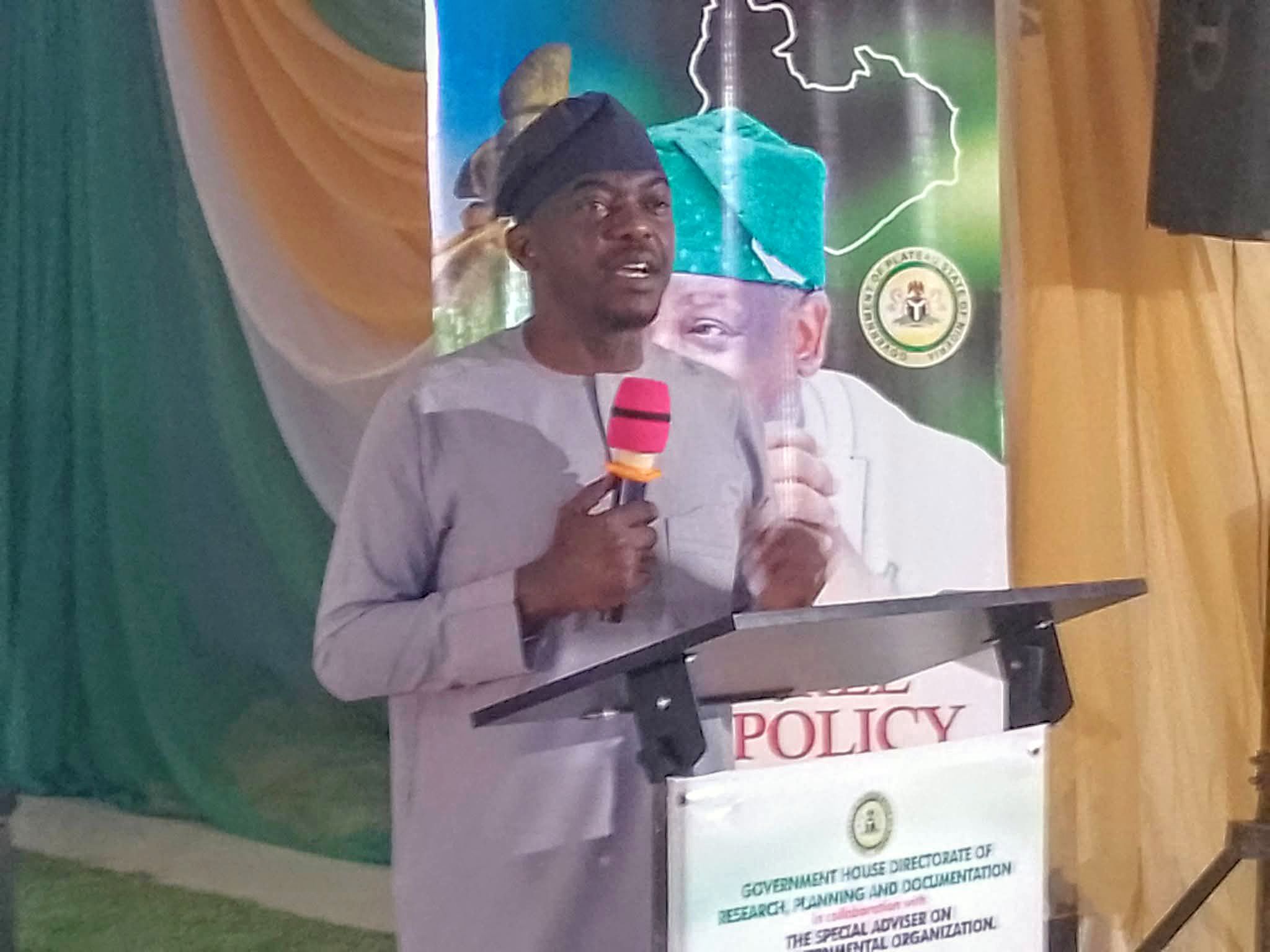
This call was made by Dr. Gad Shamaki, who delivered a keynote address at a one-day consultative meeting organized by the Government House Directorate of Research, Planning and Documentation in collaboration with the Office of the Special Adviser to the Governor on Non-Governmental Organizations with CSOs and NGOs, on Wednesday, at Eliel Centre, Gold and Base in Jos.
Shamaki noted that sustainable development and lasting peace cannot be achieved by government alone, stressing that strong partnerships among government institutions, civil society actors, development partners and citizens are critical for meaningful development.
He described Plateau State as richly endowed with agricultural potential, mineral resources such as tin, columbite and gemstones, as well as tourism attractions including Wase Rock, Assop Falls and Kura Falls. However, he said insecurity, poverty and unemployment particularly among youths continue to limit the state’s full development potential.
According to him, achieving sustainable prosperity in Plateau requires a holistic approach built on four key pillars, which are inclusive economic growth, political stability, social justice, and security of lives and property.
Shamaki emphasized the critical role of CSOs in strengthening democratic governance through advocacy, civic education, budget monitoring, transparency promotion and anti-corruption initiatives. He noted that civil society groups in the state have historically contributed to peacebuilding, policy advocacy and social reforms.
He highlighted the role of civil society during past ethno-religious crises in Jos and surrounding communities, where NGOs and faith-based organisations facilitated interfaith dialogue, mediation and reconciliation efforts.

The keynote speaker also commended the establishment of the Plateau State Peace Building Agency, describing it as Nigeria’s first sub-national peace institution working with communities, traditional leaders and civil society groups to strengthen early warning and conflict response mechanisms.
He further cited the state’s participation in the Open Government Partnership as an example of collaborative governance, noting that participatory budgeting initiatives now allow citizens across the 17 local government areas to identify priority development projects.
The keynote speaker also identified agriculture and tourism as major opportunities for economic diversification. He said the Plateau potato value chain, particularly in areas such as Bokkos, Barkin Ladi, Riyom and Mangu, continues to support thousands of farmers and traders across the country.
Dr. Shamaki stressed that political stability, inclusive governance and youth participation are essential for long-term development, adding that economic diversification through agriculture, mining, tourism and small businesses would strengthen the state’s revenue base.
He called on NGOs, CSOs and development partners to adopt data-driven approaches, maintain transparency and accountability, and strengthen collaboration in order to achieve greater development impact.
He concluded that sustained partnership between government and civil society will enable Plateau State to harness its natural and human resources to achieve peace, inclusive development and economic prosperity.