By Suzan Edeh, Bauchi
A new assessment by consulting firm Atinaefonometis, commissioned on behalf of the United Nations Sanitation and Hygiene Fund (SHF), has classified Bauchi State’s sanitation economy as a developing market, scoring it 2.44 out of 5 on the Sanitation Economy Maturity Assessment (SANIMATs) index.
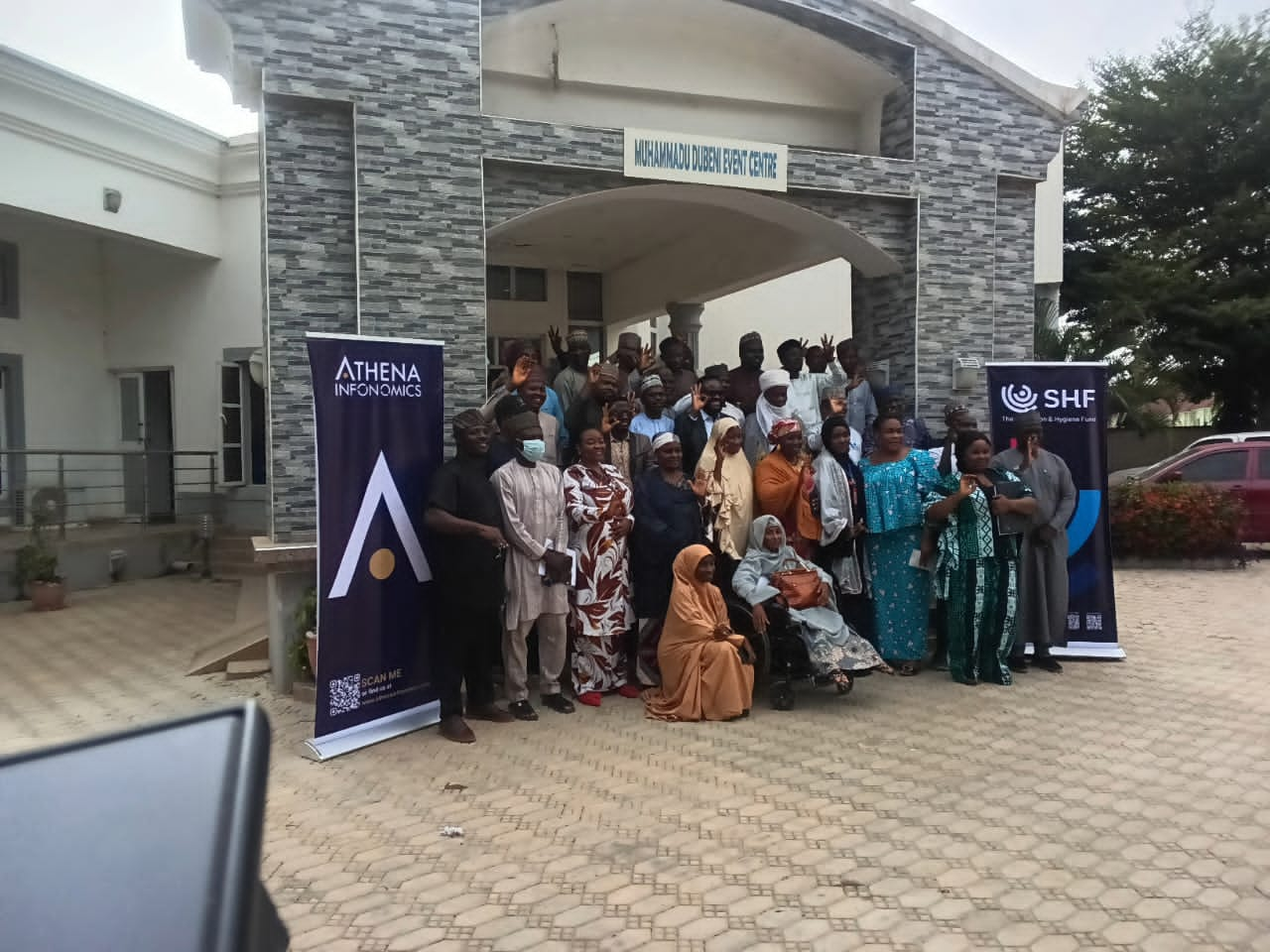
The findings were presented and officially validated during a Sanitation Economy Market Assessment Tool( SANIMAT) Bauchi State Validation workshop organised by WaterAid Nigeria in collaboration with partners, held at the Hazibal Hotel and Suites in Bauchi.
Mr Uchenna Ewa Uche, a Senior Consultant with Atinaefonometis emphasized that the state’s growing population of over nine million residents presents a highly lucrative commercial corridor for public-private partnerships (PPPs) and youth employment.
He stated that the SANIMATs framework evaluates regions across five core developmental pillars, pointing out that the assessment revealed that Bauchi’s weakest sector is its financial pillar, which scored a low 2 out of 5.
According to him, the financial lag is closely tied to broader Nigerian macroeconomic pressures, including high interest rates and persistent inflationary trends that strain local sanitation enterprises.
He stressed that the sector desperately requires patient capital, long-term funding with flexible repayment terms to allow sanitation businesses to scale without the immediate burden of high-interest loans, adding that the assessment recommended expanding Public-Private Partnerships, particularly in the downstream segment of the value chain, which includes fecal sludge evacuation and waste treatment facilities.
“To accelerate this development, the report suggested a policy and operational exchange between Bauchi and Lagos State, where a parallel SANIMATs assessment is currently underway”.
” While Lagos is widely regarded as well-advanced in structuring complex PPP frameworks, the assessment noted that Lagos could conversely learn from Bauchi’s superior multi-sectoral coordination and exceptionally clear line of sight among policymakers” he said
He disclosed recent bilateral efforts, noting that Bauchi officials recently traveled to Borno State to exchange notes on funding environmental and municipal sanitation initiatives.
“Representatives from the Bauchi State Environmental Protection Agency (ASEPA) and the Rural Water Supply and Sanitation Agency (RUWASA) welcomed the report. They noted that the state’s estimated population of over nine million people generates a massive volume of solid and liquid waste that the government cannot manage alone.
“Local environmental officials are calling for increased licensing of private vendors to transition the state toward modern waste-to-wealth programmes” .
“By legalizing and de-risking the market for private investors, Bauchi aims to establish formal commercial pipelines for trending eco-commodities, including
Biogas production for clean renewable energy,
Biofertilizers to support regional agricultural yields and
Biocharcoal as a sustainable alternative cooking fuel”.
“Moving forward, stakeholders plan to convert the validated SANIMATs data into a formal, legally binding working policy document”.
“The primary objective is to eliminate bureaucratic bottlenecks, standardise operations to meet international global benchmarks, and insulate the downstream waste sector to make it highly attractive to international and domestic investors” he said.
Also speaking at the validation workshop, the Statician General Bauchi State, Salisu Ibrahim Waziri, noted that
the Bauchi State government is actively seeking private sector investments and philanthropic partnerships to transform its growing waste management challenges into an economic powerhouse, targeting job creation, energy production, and food security
He noted that Bauchi State’s population now approaching nearly 10 million residents presents a major opportunity for a thriving waste-to-wealth sanitation economy rather than just an environmental burden, adding that while the Bauchi State Sanitation and Protection Agency (BASEPA) continues its cleanup efforts, government cannot manage the state’s massive daily solid and liquid waste volumes alone.
According to him, with the State establishing a robust Public-Private Partnerships (PPPs), it will tap into trending global economic activities to empower its large population of unemployed youths.
He said that key target investment corridors include converting solid waste into electricity and biogas, drawing inspiration from global models like Singapore, developing bio-charcoal alternatives to reduce deforestation , transforming agricultural and organic waste into bio-fertilizers and bio-manure to improve soil health and enhance regional food security.
“A recent comparative analysis and study visit to neighboring Borno State underscored the importance of funding environmental initiatives. To scale up operations, Bauchi plans to expand licensing for private wastemanagement vendors to build a modern economy that aligns with international standards”.
“Additionally, the state is inviting philanthropists to invest heavily in public health and sanitation infrastructure, specifically calling for the construction of modern public toilets and advanced fecal sludge management plants”.
“Beyond infrastructure and funding, experts at the validation event noted that attitude accounts for roughly 50% of all sanitation issues. Strict environmental laws already exist, but weak implementation and poor public mindsets remain major roadblocks” he said
According to him, Bauchi State intends to launch widespread advocacy and mentorship campaigns, stressing that the programs will focus on psychological behavioral changes and urged residents to take personal responsibility for their solid, liquid, and gaseous waste to ensure a cleaner, safer living environment.
