From Abubakar Abdullahi, Lafia
The Strengthening Public Accountability for Results and Knowledge, SPARK, Project has institutionalised budget engagement for smallholder women farmers in Nasarawa State, with prospects for continuity beyond the intervention period.
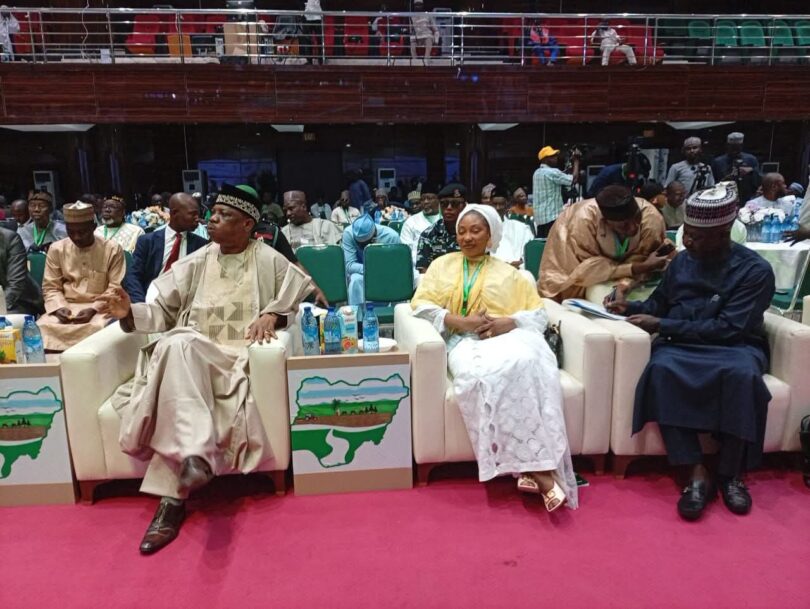
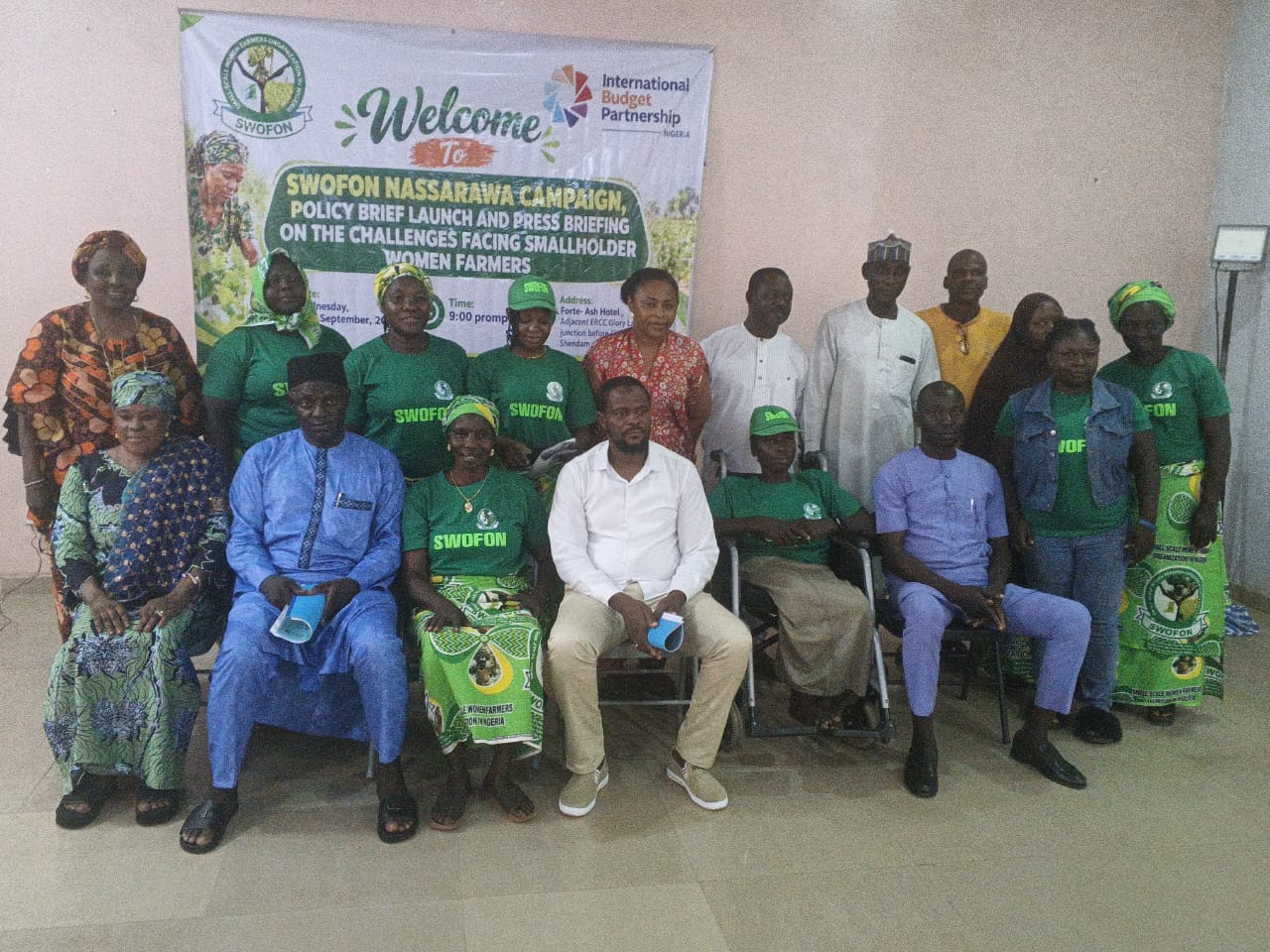
This was disclosed by the Technical Officer of the Small Scale Women Farmers Organisation in Nigeria, SWOFON, Hajara Ramson, during a campaign and press briefing on accepting women farmers impact towards food security policy held in Lafia, on the SWOFON Impact Assessment 2019-2025.
Ramson said the SPARK initiative, implemented through partnership between the International Budget Partnership, IBP, and SWOFON with support from ActionAid Nigeria, built the capacity of over 500,000 women farmers nationwide to engage state budget processes, with Nasarawa as one of five focal states alongside Niger, Anambra, Oyo and Jigawa.
She explained that the major tool for engagement was the Charter of Demands submitted annually by SWOFON’s Nasarawa chapter, which was acknowledged by government and included in state consultations, but with only partial uptake including communal land allocated at Keffi and Kokona without a dedicated, traceable appropriation line.
Presenting further findings, Ramson said Nasarawa’s agriculture allocation fluctuated between 4.43 per cent and 7.54 per cent in the last five years, never reaching the African Union’s 10 per cent Maputo/Malabo benchmark, with a five-year cumulative allocation of N57.20 billion out of N960.09 billion representing 5.96 per cent.
She however noted that Nasarawa recorded the highest agricultural capital budget execution rate among the five states at 72.6 per cent, compared to Jigawa 66.9 per cent, Niger 44.4 per cent, Anambra 29.3 per cent and Oyo 17.5 per cent, a performance associated with more traceable response to its Charter.

Ramson identified the Village Savings and Loan Association, VSLA, model where members access N10,000 to N30,000 credit to avoid selling crops at depressed prices during school resumption as the most tangible contribution of the SPARK intervention to women’s economic empowerment in the state.
The State Coordinator of SWOFON, Jummai Yohanna, while presenting the community town hall recommendations, said agriculture remains the economic mainstay of the state with 13 Local Government Areas, but women who are central to production, processing and marketing face constraints in land, inputs, finance, mechanisation, infrastructure, markets and security.
Yohanna lamented that participation has not translated into funding, noting that between 2021 and 2025 agriculture averaged 5.82 per cent of approved budgets, and that improved land access does not guarantee ownership, as 84.9 per cent reported improved access while 24.5 per cent reported not owning land across the five states.
She decried that agricultural support reaching members remained small seedlings for 10 members and 25 bags of fertilizer against roughly 2,000 members in the state and called for sex-disaggregated beneficiary data to track how many women are reached in distributions such as the 1,300 bags distributed in Nasarawa Eggon LGA in November 2024.
She stressed that access to communal land at Kokona is an important but incomplete response, as access is not ownership without clarity on duration, beneficiary selection and tenure security, and that lack of storage, processing, transport and market linkages prevents support from translating to income.
According to Yohanna, SWOFON demands conversion of Charter demands into costed, traceable budget commitments linked to responsible MDAs with approved, released and implementation details, institutionalisation of women’s participation at State and LGA levels, improved budget transparency, and stronger land-access mechanisms.
She also called for expansion of affordable mechanisation services for women cooperatives, responsive extension services at community level, and investment in processing, storage and aggregation, while noting that private investments like 14,000 hectares rice in Toto with Azman and 20,000 hectares cassava/sugar near Umuasha with Flour Mills should complement rather than displace smallholders.
Responding on behalf of the Commissioner for Budget and Economic Planning, Hon. Ahmed Yakubu, the Deputy Director of Budget, Mr. Ezekiel Achiaku, who said he is an integral part of SWOFON in the state, pledged that the Ministry will ensure women farmers’ priorities are captured in the 2027 budget.

Achiaku said the campaign is timely as the state is just kick-starting its budget process, and advised SWOFON to engage directly at MDA level, listing Ministry of Agriculture, Nasarawa Agricultural Development Programme, NADP, FADAMA, Value Chain and Ministry of Women Affairs as critical entry points.
He assured that the Budget Department is ready to cooperate, saying whatever SWOFON deliberates with MDAs will be included in the budget, because without farmers, survival of the state will become questionable.
On fertilizer distribution, the program manager of Nasarawa Agricultural Development Program (NADP), Umar Nuhu, explained that fertilizer distributed in 2025 and 2026 was supplied by the Federal Government through the Federal Ministry of Agriculture and Food Security and in 2026 in collaboration with the National Agricultural Development Fund, shared 60 per cent to AFAN and 40 per cent through the Ministry for distribution across 13 LGAs and 147 wards.
Nuhu also advised farmers to stop planting saved grains as seeds, using the Hausa adage “Kuna cin tuwo da miyan jiya,” saying saved seeds are just grains that hardly give desired yields, and urged them to source improved seeds, seedlings and inputs from ADP depots for proper technical backstopping.

He clarified that extension service delivery remains active with agents across LGAs, wards and communities taking improved technologies to farmers fortnightly, stressing it is a community-wide responsibility, not for a particular group alone.
Also speaking, the Director, Agricultural Engineering Services, Nasarawa State Ministry of Agriculture and Food Security, Mrs. Lydia Habila Kyari, reaffirmed the Ministry’s commitment to inclusive agriculture including persons with disabilities, saying if there are no farmers, there is no food.
Kyari commended SWOFON women for their passion for farming, disclosed that the Ministry has placed advert and is writing a memo to the Governor to invite women into ginger production, and has been involving the association in workshops.
On fertilizer challenges, she admitted that the quantity supplied could not go round after distribution was channelled through the 13 local government chairmen who picked trucks to their localities, and promised to stand firmly for SWOFON for better inclusion in future distributions.
She concluded that the Ministry is with the women farmers, urging them to keep reminding her of their needs, as the IBP-SWOFON assessment shows Nasarawa has a foundation of participation and strong capital execution that now needs to be linked to measurable outcomes for productive and economically empowered women farmers.