By Suzan Edeh, Bauchi
Thousands of smallholder farmers in Northern Bauchi are set to experience an agricultural turnaround following a major intervention targeted at boosting crop yields, improving seed quality and building climate resilience.
The initiative is driven by the Foundation for Sustainable Smallholder Solutions (FSSS) and the HEINEKEN Africa Foundation (HAF) under the Empowerment of Smallholders to Thrive and Build Climate Resilience through Regenerative Agriculture (ESTRRA) Project.
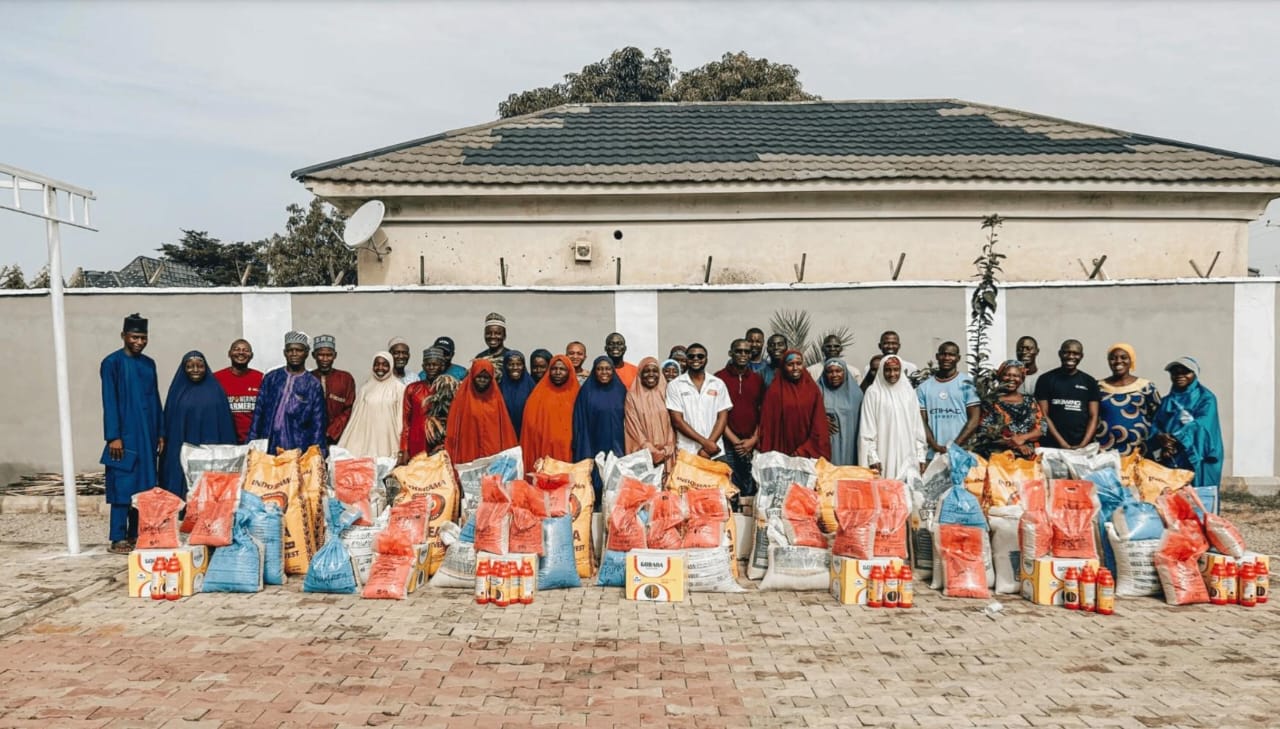
To combat the severe lack of high-quality agricultural materials in the region, the project distributed over 1,000 units of critical agro-inputs to 11 Farmers’ Hubs.
The supplies worth millions of Naira include Fertilizers and nutrient management packs, Herbicides and crop protection chemicals, seed treatment products and Knapsack sprayers.
The distribution targeted vulnerable farming communities during the 2026 farming season, explicitly reaching Gambaki, Bulkachuwa, Chibiyayi, Diga, Dogon-Jeji, Faggo, and Kurba across the Katagum, Zaki, Giade, Itas-Gadau, Shira, and Jama’are Local Government Areas (LGAs).
Mohammed Dahiru Auwal, Manager of the Bulkachuwa Farmers’ Hub, noted that the localized hubs eliminate heavy transportation costs for local farmers.
“Before now, farmers in this community had to travel long distances to buy quality fertilizers and farm inputs.With the Farmers’ Hub now stocked, farmers can access what they need closer to their farms and at the right time”.
“A recent 2026 baseline assessment conducted by the ESTRRA project exposed a critical vulnerability in Bauchi’s food security where 87% of local smallholder farmers rely on informal or farmer-saved seeds, while a mere 12% utilize improved or certified varieties”Auwal stated.

To bridge this gap, FSSS hosted a specialized two-day seed production training in Azare for 28 representatives from seven Community-Based Organisations (CBOs) notably achieving over 50% female participation.
Attendees were trained in certified seed production for regional staples, including Rice, Millet Sorghum Cowpea, Groundnut.
Rather than relying on continuous aid, the project focuses on self-reliance. Each participating CBO received specialized foundation seeds and crop protection packages to establish three hectares of localized seed multiplication fields.
This will culminate in a combined minimum of 21 hectares of high-yield community seed production fields across Northern Bauchi.Abigail Kwila, a participant from a Katagum LGA-based CBO, emphasized the economic empowerment of the training.
“We have learned about proper seed production practices, certification requirements, and how to manage seed production as a business,” she said.
To ensure the hubs remain financially viable beyond the initial funding cycle, the intervention included professional business management training for all Hub Managers, focusing heavily on inventory control, transparent pricing, record-keeping, and financial accountability.Dr. Abubakar Hassan Inuwa, Senior Agronomist at FSSS, reiterated that the objective is systemic change.
“Our goal is not simply to distribute seeds but to build the capacity of communities to become seed producers themselves”.
“We are laying the foundation for stronger local seed systems that can continue serving farmers long after the project cycle.” Inuwa said.