By Dorathy Aninge
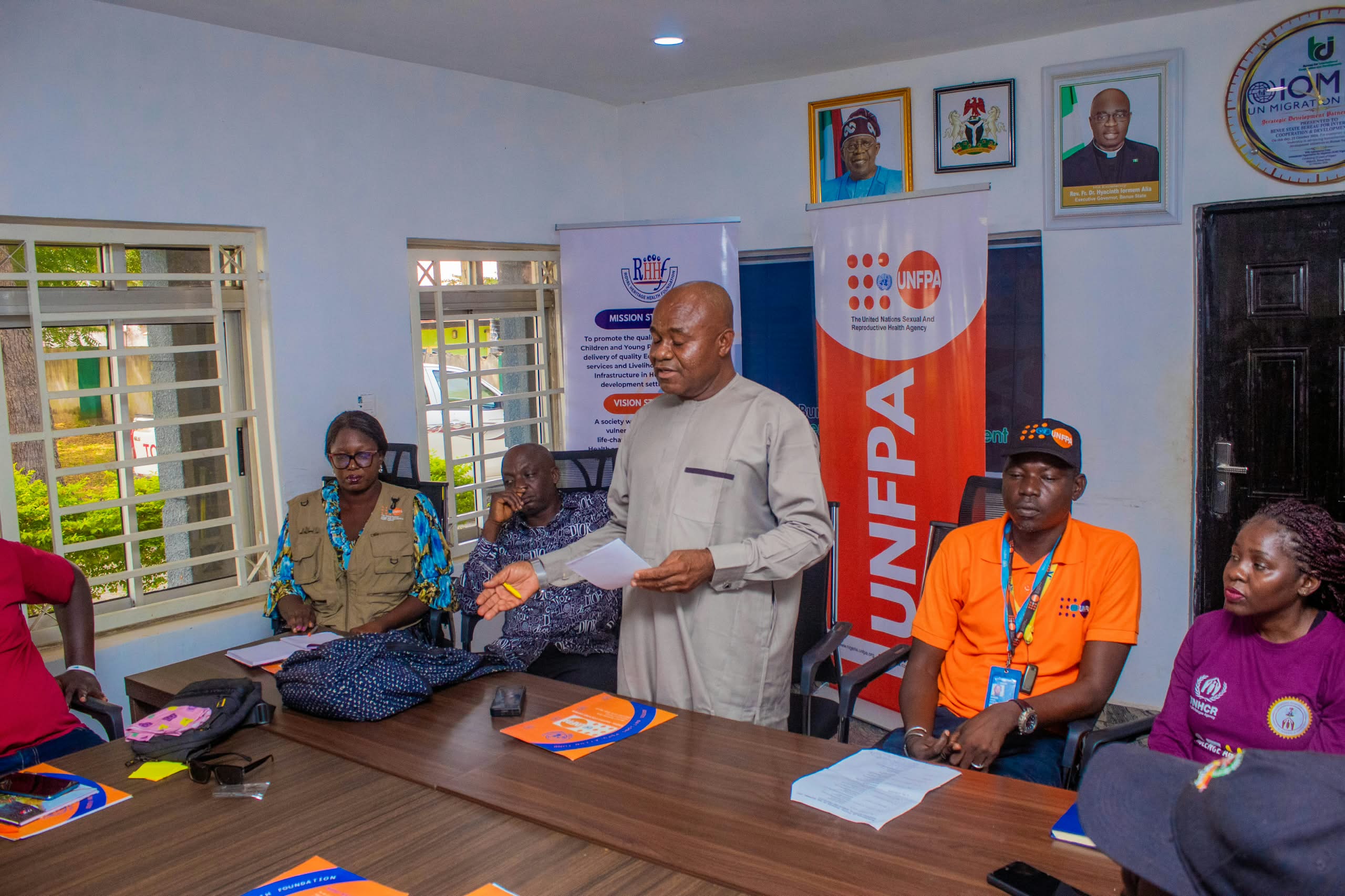
The Benue Ministry of Youth, Sports and Creativity, in collaboration with the Royal Heritage Health Foundation (RHHF) on Tuesday in Makurdi, began a training of 120 youths on digital literacy.
The News Agency of Nigeria (NAN) reports that the five-day digital literacy training is supported by the United Nations Population Fund (UNFPA) and funded by the Government of Japan.
Mr Nick Eworo, Benue Commissioner for Youth, Sports and Creativity said the training is aimed at equipping participants with digital skills to improve employability, entrepreneurship and access to information.
Eworo, represented by the ministry’s Permanent Secretary, Dr Philip Nongu, pledged to sustain digital literacy programmes for young people in the state.
The commissioner said that digital competence had become essential for employment, business development, online transactions and access to educational resources.
He disclosed that the ministry planned to organise three additional training programmes for young people and urged participants to apply the knowledge acquired to improve their professional performance and contribute to development.
Similarly, Mrs Theresa Ikwue, Commissioner for Women Affairs and Social Welfare, represented by Mr Teryima Orkuma, Principal Welfare Officer, urged participants to maximise the opportunity.
Ikwue said digital literacy was increasingly important for accessing information, acquiring knowledge and contributing meaningfully to societal development.
She urged participants to share their knowledge and help others acquire relevant technology skills.
Dr Leonard Viashima, Director-General, Benue Bureau for International Cooperation and Development, said participants had been drawn from various ministries, departments and agencies to facilitate the transfer of knowledge across government establishments.
Viashima described the programme as a Training of Trainers (ToT) initiative, urging participants to organise follow-up sessions and replicate the training within their respective organisations.
He also recommended establishing a community of practice involving relevant government agencies to sustain collaboration, share resources and strengthen digital literacy initiatives beyond the training.

Mr Adamu Hamman, Benue Programme Officer of UNFPA Nigeria, said the initiative was designed to promote digital inclusion, particularly among women, adolescent girls, young people and vulnerable communities.
Hamman said digital skills had become essential for education, employment, entrepreneurship and access to information, adding that the programme would help participants overcome technological barriers and explore new livelihood opportunities.
He explained that the training would be delivered in two phases, beginning with basic digital literacy to equip participants with foundational skills in navigating digital devices, accessing information, communicating effectively and using digital tools safely.
According to him, the advanced phase would cover Artificial Intelligence (AI) foundations, prompt engineering, AI chatbots, digital marketing, graphic design, technology-facilitated fight against gender-based violence, digital safety and AI ethics.
Hamman added that the training would be delivered in English, Hausa and other relevant local languages to promote inclusive participation.
He said trained facilitators would subsequently cascade the training to other participants through at least two rounds before the programme ended.
He urged participants to apply their knowledge to improve their livelihoods, enhance employability and promote safe and responsible technology use.
He also called for stronger institutional collaboration to ensure the sustainability of the initiative.
Ms Evelyn Katono, UNHCR Head of Field Office in Benue, commended UNFPA, RHHF and the ministry for promoting digital inclusion.
Katono said digital skills were increasingly necessary for education, employment, entrepreneurship and active participation in contemporary society.
She noted that equipping trainers with digital competencies would create a multiplier effect, enabling more young people and communities to benefit from the initiative. (NAN)