Experts Urges Media to Move Beyond Statistics to Drive Change
By Suzan Edeh, Bauchi
Nigeria accounts for a staggering 29% of the global maternal mortality burden, making it the highest contributor to maternal deaths worldwide according to recent UN reports.
This crisis is further highlighted by data from the 2024 National Demographic and Health Survey (NDHS), which reveals that out of an estimated 20 million deliveries in the country, approximately 68,000 women die annually from pregnancy-related complications.
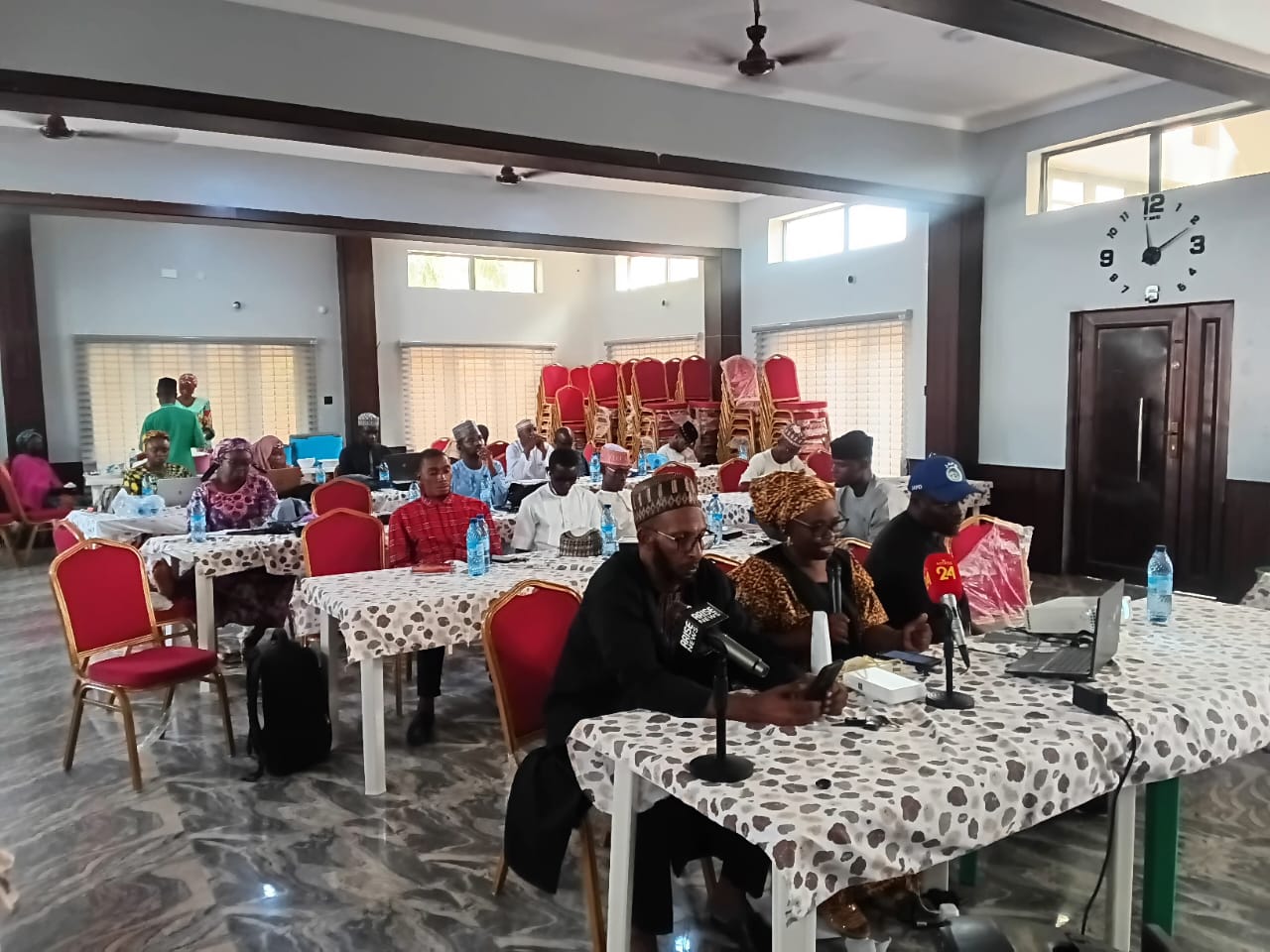
The United Nations Population Fund (UNFPA) Gender/ Reproductive Health Specialist, Musa Elisha made this known during a two day Capacity Strengthening Training for journalists on accurate reporting of UNFPA 9th Country Programme, organized by State Ministry of Budget, Economic Planning and Multilateral Coordination in partnership with the UNFPA and Journalists for Public Health(J4PD), held at the Medical and Health Workers Union of Nigeria (MHWUN) Hall Bauchi.
The training aims to equip media practitioners with the tools to deliver accurate, ethical, and evidence-based reports on sexual reproductive health, gender-based violence (GBV), and youth development.
He called for a strategic partnership with the media to boost healthcare transparency, drive donor funding, and raise grassroots awareness.
According to him, vast majority of maternal deaths in Nigeria are tied to preventable clinical conditions such as Postpartum Hemorrhage, a Severe Bleeding Identified as the leading cause of death immediately after childbirth, Preeclampsia and Eclampsia, a Pregnancy-induced hypertension accounting for a significant portion of maternal fatalities.
Other conditions according to him are Sepsis, an Infection which account for 15% of deaths, unsafe Abortion due to restrictive legal frameworks where young and teenage girls frequently resort to unsafe, clandestine procedures, contributing to 13% of maternal mortality, Obstetric Embolism, accounting for 8% of the recorded fatalities and other conditions such as malaria, HIV, diabetes, and hepatitis heavily compound pregnancy risks.
“Beyond mortality, survival often comes with severe morbidity. For every woman who dies in childbirth, 20 to 30 others suffer severe, long-term complications, most notably obstetric fistula”
“The crisis exhibits clear geographic and social disparities. Maternal mortality rates are heavily concentrated in the northern parts of Nigeria, whereas the South-East and South-West regions record lower figures”.
“This divide is driven largely by deep-seated gender inequality. Due to a lack of autonomy, many pregnant women are unable to make independent decisions to seek medical care, delaying treatment until life-threatening complications arise. Furthermore, while health facilities have been established across various regions, many women remain unaware of their locations or dissatisfied with the available services” he said.
Elisha emphasized that the media is a vital pillar in reversing these trends by tracking data, showcasing impacts, and ensuring transparency in how donor funds are deployed such as UNFPA’s joint efforts with national health centers, demonstratung that visible, documented progress successfully attracts critical international funding.
He noted that journalists must go beyond reporting statistics to actively create awareness about healthcare facility locations and dismantle social barriers by partnering with influential traditional, religious, and community leaders, adding that the media can spearhead the behavioral shifts necessary to ensure women and girls can safely access maternal and newborn healthcare services.
Also Speaking in her presentation, a UNFPA Gender/GBV Specialist, Dr Zubiada Abubakar challenged the media to look beyond statistics and expose critical gaps in maternal healthcare, stressing on the need for deep investigative reporting on government-funded healthcare programs, including the effectiveness of rural maternal transport schemes, while strictly maintaining the dignity and privacy of vulnerable survivors.
She said that as part of its ongoing intervention, UNFPA is actively supporting 14 states across Nigeria to expand emergency community-based healthcare access and strengthen the implementation of the Maternal and Perinatal Death Surveillance and Response (MPDSR) framework.
“The programme adopts a strict “no name, no blame, no shame” approach, enabling communities and governments to track, review, and prevent maternal fatalities transparently”.
“I urge the media to evaluate the actual capacity and operational standards of primary healthcare centres across the country. Journalists are encouraged to track and investigate critical metrics, including Infrastructure functionality, that is an assessment of how many rural healthcare facilities are truly operational and if they meet basic quality standards”
“The media should also track local records, including the actual number of successful deliveries, emergency caesarean sections and patients discharged versus those lost to avoidable complications. Also, journalists should investigate the midwifery and staffing Gaps, verifying the graduation rates of state midwifery schools and investigating why qualified healthcare workers are missing from rural facilities”
“Maternal health extends beyond mortality to long-term morbidity, most notably obstetric fistula—a devastating childbirth injury that leaves women incontinent. UNFPA has significantly expanded its regional support, including the establishment of a 15-bed maternity and fistula repair unit at a government maternity hospital located roughly four to five hours from a northern state capital’ She said
Dr Zubiada urged journalists to document these deeply personal journeys of the affected victims, pointing out that
they must operate under strict ethical standards by shifting away from sensationalism, pity, or victim-blaming, and adhere to the following core guidelines:
She said that written or documented verbal consent must be completely voluntary and informed, stressing that providing healthcare services or assistance must never be made conditional on a survivor agreeing to be interviewed.
The UNFPA GBV Specialist, said that Media reporting should protect the privacy and dignity of the victims, adding that media organizations must use accurate medical terminologies, distinguishing clearly between mortality and morbidity.
She said that the media as a way forward, should ensure that news reports must contextualize maternal health not as isolated tragedies, but as systemic failures, adding that media narratives should humanize the victims as mothers, wives, and valued community members while pressing both state and national governments to increase domestic funding for health insurance and social protection schemes.
In his remarks, the Bauchi State Commissioner of Information, Dr. Usman Shehu Usman who was represented by a Director in the ministry emphasized that the media remains a strategic partner in driving public awareness and ensuring government accountability.
“Reporting on these sensitive issues requires deep professionalism, absolute accuracy, and unwavering respect for the dignity and privacy of survivors.As media practitioners, you have a distinct responsibility to challenge misinformation and give visibility to the vulnerable groups in our communities.” The Commissioner stated.
Speaking at the event, the Executive Director of J4PD, Elizabeth Kah, emphasized the critical timing of the training,noting that journalists must stay highly conversant with specialized reporting to help achieve societal health and development goals.
Kah also expressed gratitude to the UNFPA, channeling appreciation through the Bauchi State Ministry of Economic Planning and Multilateral Coordination and commended the partners for trusting J4PD as the visibility partner for the project, describing the collaboration over the past few years as a highly rewarding experience.
According to her, originally emerging from the Bauchi Public Health Media Network, J4PD was founded in 2018 by a network of experienced media practitioners, pointing out that that the group aims to leverage the power of journalism as a tool for public awareness and social accountability. It formally registered with the Corporate Affairs Commission (CAC) in 2020 as a non-profit, non-political, and non-religious non-governmental organization.