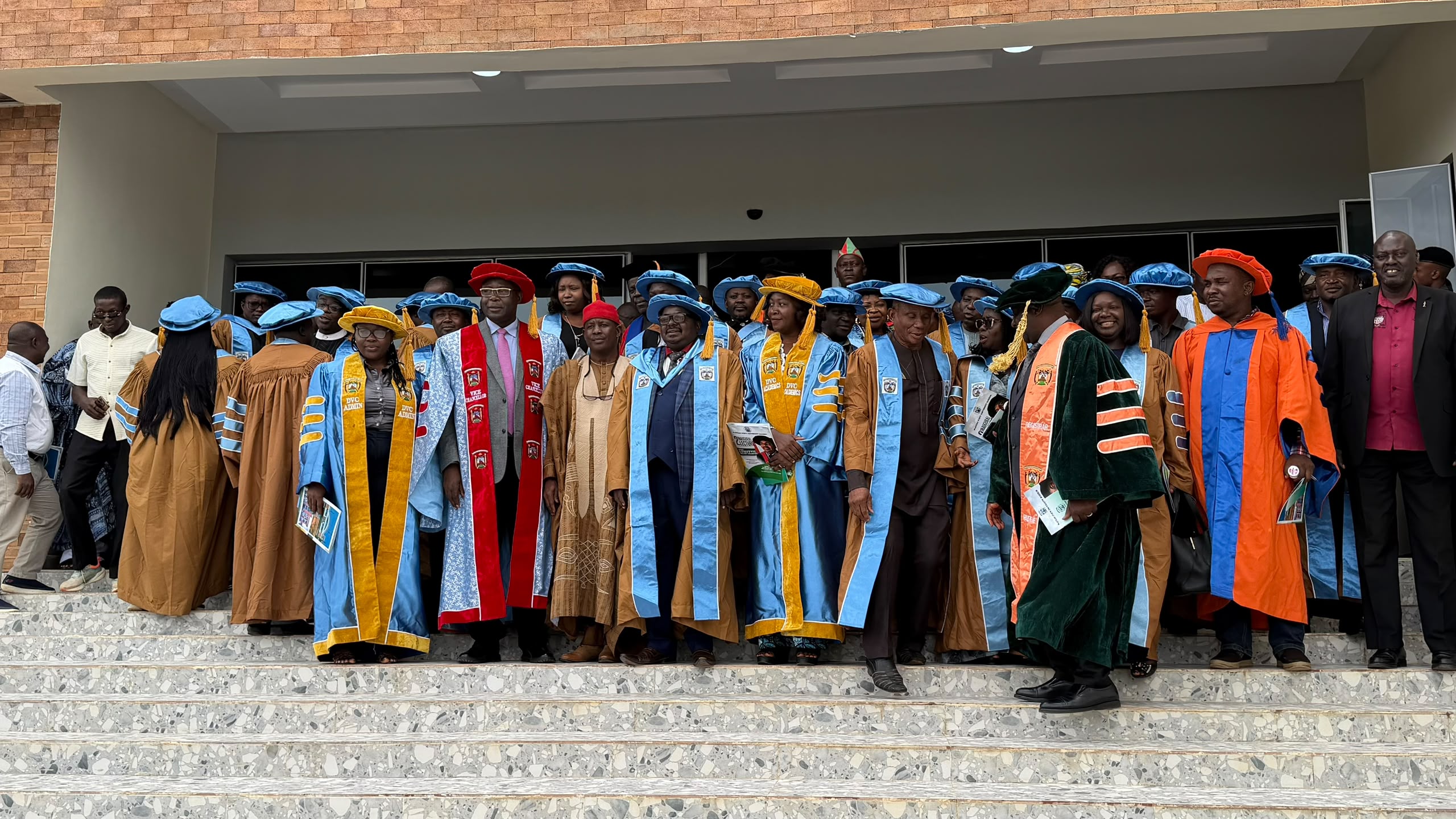
Plateau State University, Bokkos (PLASU) has invited investors across agriculture, energy, manufacturing, technology and other sectors to partner with the institution, following its growing investment in research, innovation and development.
The Vice-Chancellor of the University, Professor Shedrack Best, made the call on Wednesday while speaking at PLASU’s 2nd Inaugural Lecture, according to statement by the Acting Information Officer of PLASU, Masara Kim.
Best said the University had moved beyond its formative years and developed strong capacity in teaching, research and innovation, creating opportunities for meaningful partnerships with the private sector and other investors.
“PLASU is beyond a baby university at this stage. What we are giving the people of Plateau State is a university befitting of their standing. We don’t want to be ranked behind any state university in the North. There is no justification for that,” he said.
The Vice-Chancellor said the theme of the inaugural lecture, titled “An Exposé on the Global South: 21st Century Challenges and Opportunities,” was particularly relevant to the University’s growing engagement with Artificial Intelligence (AI) and other emerging technologies.
“This is a wonderful opportunity for investors in the private sector, agriculture and many other areas to partner with PLASU. The focus on the Global South shows you can have AI that appreciates and works with humanity to improve life,” Best stated.
He explained that AI and machine learning had become part of the University’s academic and research activities, stressing that PLASU’s engagement with emerging technologies places Plateau State within the broader global ICT community.
“With respect to today’s lecture, artificial intelligence, machine learning and all of these are present in our University. We are delighted to celebrate a professor who has worked and taught in computer science and artificial intelligence,” he said.
Best added that PLASU had started producing professors from within its own academic system, with more than 10 professors of PLASU extraction so far.
According to him, the tradition of inaugural lectures provides senior academics with an opportunity to present the outcome of their teaching, research and community service, adding that the University would continue to create platforms for its professors to share their expertise.

He said several other professors had been lined up to deliver inaugural lectures, expressing optimism that two or three more lectures would be held before the end of 2026, with additional ones expected in 2027 following ongoing academic appraisals.
On the University’s expansion, the Vice-Chancellor disclosed that PLASU had grown significantly since his assumption of office, with its original five faculties progressing towards 400-level studies, while two new faculties were already transiting to 200 level.
He further revealed that 16 new academic programmes were about to commence at 100 level, while the University was also strengthening its staff capacity and improving the quality of its academic workforce.
Best attributed the University’s progress to the support of the Visitor to the University, as well as the government and people of Plateau State.
Delivering the inaugural lecture, the guest lecturer, Professor Luhutyit Peter Damuut of the Department of Computer Science, PLASU, highlighted the opportunities presented by Artificial Intelligence to communities in the Global South, particularly within the academic environment.
Damuut said his choice of the topic was informed by global developments and his longstanding research interest in the field, noting that he had been working in the area since 2005.
“AI has been with us in different forms. We started out and most of the things we were working on evolved into AI today. AI has its roots in computer science,” he said.
He urged stakeholders to embrace Artificial Intelligence, explore its opportunities and develop strategies for addressing challenges associated with its application, particularly those peculiar to countries and communities in the Global South.
“AI found us and now it’s here to live with us. We have to embrace it, work with it and explore the opportunities in it while containing the challenges, especially those peculiar to us within the Global South,” Damuut added.
.