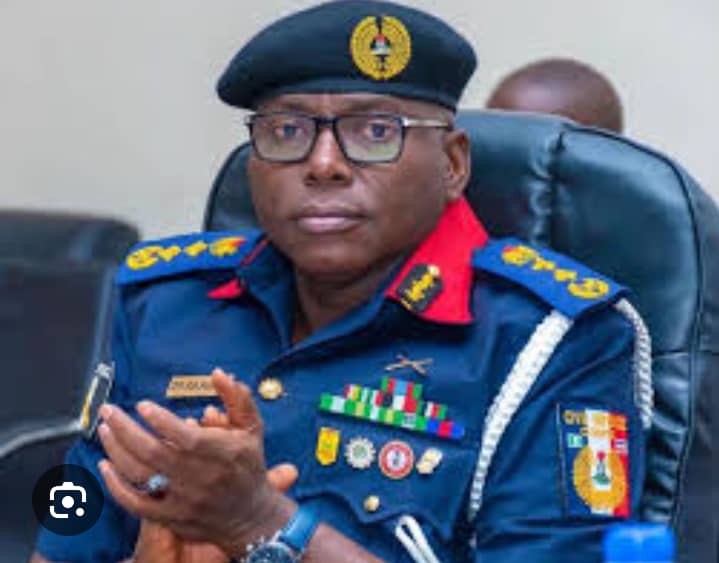
Prof. Ahmed Audi, Commandant General of the Nigerian Security and Civil Defence Corps (NSCDC) has called for the use of Artificial intelligence to preserve Indigenous Knowledge Systems (IKS) as pathway to national security.
He stated this at the Social Studies and Civic Educators Association of Nigeria (SOSCEAN) 14th North Central Zonal Conference taking place at the Nasarawa State University Keffi (NSUK) on Thursday.
Our Correspondent reports that the theme of the conferece is “Reimagining Civic Education and Social Studies Through African Traditional knowledge: Transforming knowledge, attitudes, policies and practices in the digital age”.
Audi presented the lead paper of the conference on the topic titled “Harnessing digital technologies and AI to safeguard indigenous knowledge systems: Pathways to national security and sustainable development in Nigeria”.
In his presentation, Audi said indigenous knowledge systems in Nigeria covering medicine, conflict resolution, agriculture, early warning practice and governance are still vital yet endangered national assets for development across communities nationwide.
“This paper therefore examines how digital technologies and artificial intelligence can be harnessed to safeguard indigenous knowledge systems as pathways to national security and of course sustainable development in Nigeria using qualitative text based methodologies and secondary sources today,” he said.
He then listed three interellated pathways in which AI and digital technologies can help preserve indigenous knowledge systems to include: digital archiving and AI enabled transcription; integration of IKS with AI and safeguarding IKS.
Audi who further argued that safeguarding IKS is not just a cultural concern but a development and strategic security imperative proposes a five-stage framework to include IKS digitization, AI processing, secure repository, application for security and development, and the establishment of a national IKS digital repository.
In a remark, Prof. Sa’adatu Liman, Vice Chancellor of Nasarawa State University Keffi (NSUK) represented by Prof. K’tso Nghargbu, Deputy Vice Chancellor (Research, Innovation and Linkages) lauded the association for the theme of the conference which she said will be discussed through the eye of indigenous norms, traditions, environment and culture
“Please, let us solve our problems using homegrown solutions. And this is why we’re proud of this conference, proud to be associated with it, and we pray
that we will raise a generation
that will become more patriotic,” she said.
In her address, Dr Ruth Umaru, President, SOSCEAN North Central Chapter said reimagining social studies and civic education through African traditional knowledge does not imply rejecting modern educational innovations or technological advancement.
She explained that it rather requires Nigerians to establish a productive relationship between indigenous knowledge and contemporary educational practices, in ways that promote cultural identity, critical thinking, democratic citizenship, social responsibility, and sustainable national development.
”The various subthemes of this conference provide opportunity for participants to interrogate critical issues relating to African indigenous education, citizenship and character development, curriculum integration, traditional governance, peace building, artificial intelligence, digital citizenship, youth engagement, gender and social justice, environmental sustainability, innovative pedagogies, and educational policies.
I am confident that the scholarly papers, discussions, and recommendations emerging from these themes areas will contribute significantly to improve educational practices and strengthening the relevance of social studies and civic education in the contemporary Nigeria,” she said.
Umaru added that the increasing challenges of insecurity, social intolerance, ethnic and religious divisions, moral decadence, and declining civic responsibilities in Nigerian society further underscore the importance of social studies and civic education.
“These realities demand renewed commitment from educators, researchers, policy makers, and other stakeholders towards promoting national unity, tolerance, mutual respect, peaceful coexistence, and responsible citizenship.
“I strongly believe that African indigenous knowledge, when appropriately integrated with contemporary educational innovations, can provide valuable insight and practical strategies for addressing these challenges,” she said.