By Peter Amine
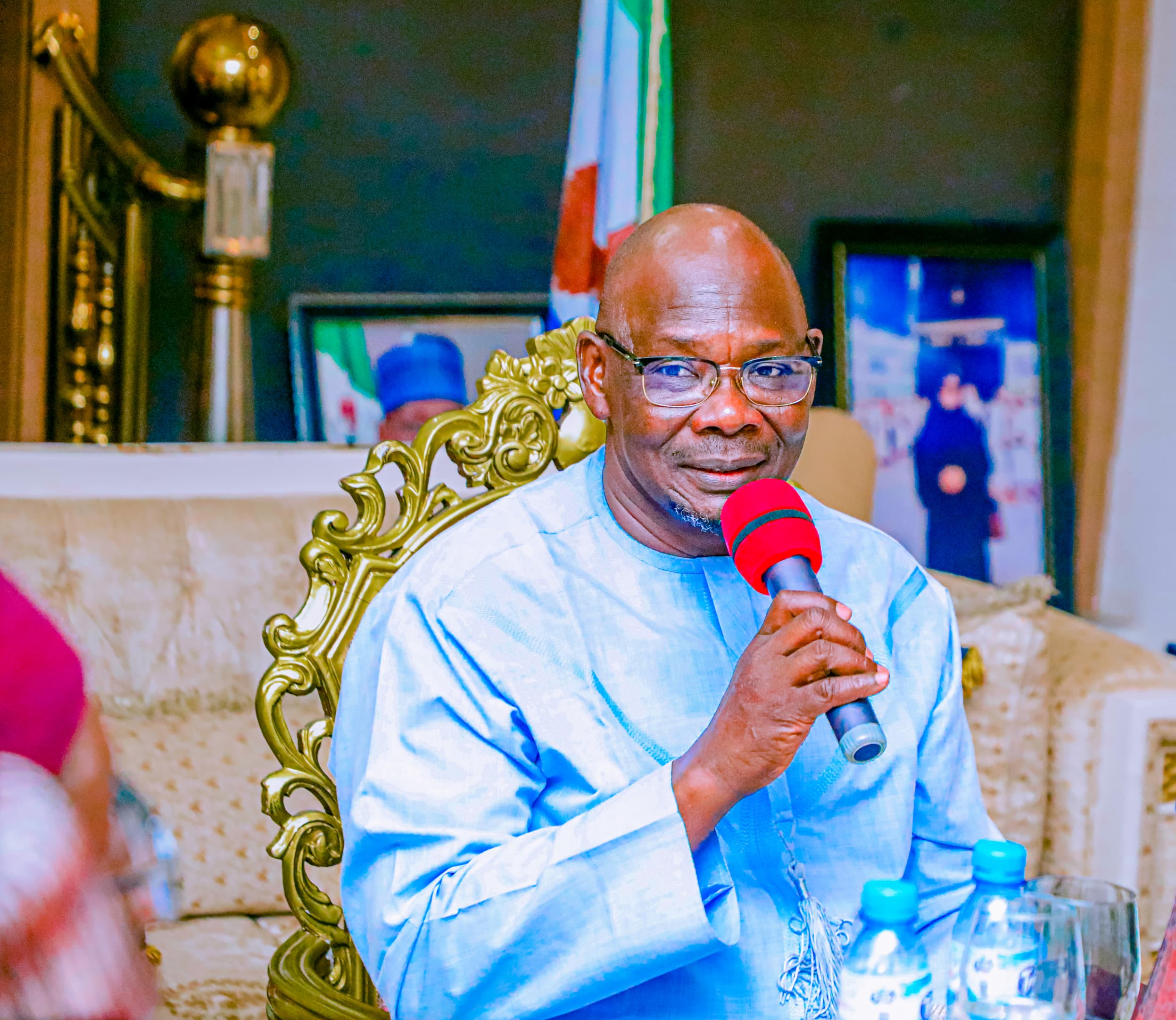
Rev. Prof. Andrew Ogah Ijwo, a Professor of Broadcasting and Development Communication, has advocated the licensing of journalists to enhance professionalism and address quackery in the media industry.
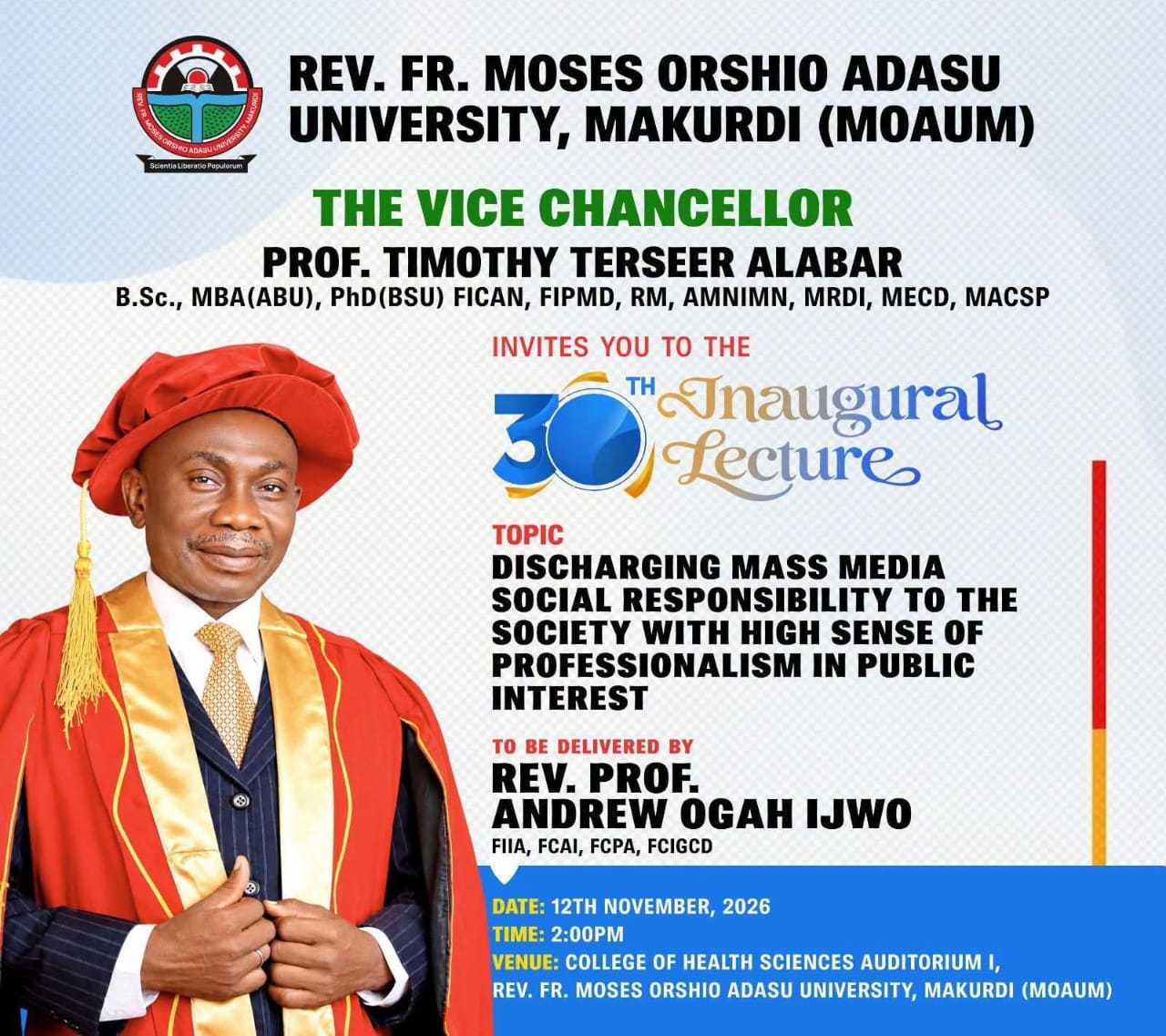
Ijwo made the call on Wednesday in Makurdi while delivering the 30th inaugural lecture of Moses Orshio Adasu University, Makurdi, titled, “Discharging Mass Media Social Responsibility to the Society with High Sense of Professionalism in Public Interest”.
He said the journalism profession needed a common regulatory body with powers to license practitioners after training and withdraw their licences where they violated professional standards.
The professor said the proposed arrangement would go beyond the existing professional associations, including the Nigeria Union of Journalists (NUJ), Nigerian Guild of Editors (NGE) and Broadcasting Organisations of Nigeria (BON).
He noted that although journalists were professionals in their own rights, the profession itself needed to be fully professionalised, similar to law, medicine and engineering.
Ijwo said journalists must uphold the ethics of the profession, including truthfulness, objectivity, fairness, balance and accuracy, while discharging their social responsibilities.
He stressed that public interest should take precedence over press freedom, noting that the media existed primarily to serve the society rather than themselves.
According to him, press freedom is not absolute, as the protection of individual rights and the safety and stability of society must also be considered in media practice.
He acknowledged the role of regulatory agencies such as the National Broadcasting Commission (NBC) and the Nigeria Press Council (NPC) in ensuring that media organisations operated in the public interest.
However, he urged government to provide an enabling environment for journalists to perform their duties, while holding practitioners accountable for reports that infringed on individual rights or undermined legitimate societal values.
The don said the media had continued to play critical roles as the fourth estate of the realm through surveillance, correlation, cultural transmission, public sensitisation and mobilisation of citizens for national development.
He recalled the contributions of the Nigerian press to the struggle for independence, the fight against military dictatorship and the restoration of democratic governance in 1999.
Ijwo also highlighted the challenges journalists faced in accessing information, particularly when government officials withheld information in the name of protecting official interests.
He said the situation reflected what media critic William Rivers described as an “adversary relationship” between journalists and government officials.
The professor urged journalists covering specialised beats, including health, to explain technical terms in simple language to ensure that members of the public understood their reports.
In his remarks, the Vice-Chancellor of the university, Prof. Timothy Alabar, represented by the Deputy Vice-Chancellor (Academics), Prof. Innocent Oguche, reaffirmed the institution’s commitment to sustaining its inaugural lecture tradition.
Oguche said the vice-chancellor had directed that faculties should present at least two inaugural lectures annually, subject to the readiness of professors.
He said the university had already received applications from some professors and was making arrangements to schedule their lectures for the coming year.
Oguche encouraged professors and other academics to use inaugural lectures to share their research findings, community engagement and contributions to professional development.
He commended participants for supporting the university’s academic tradition and urged academics to sustain the initiative. (NAN)