By Emmanuel Antswen
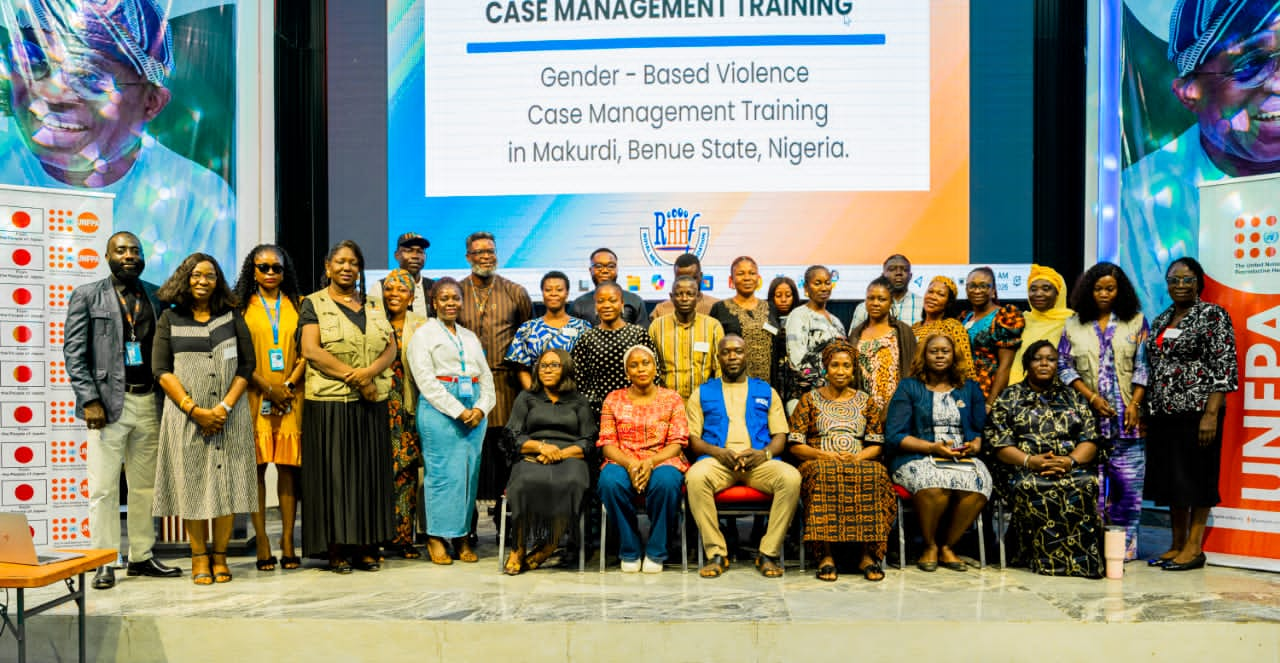
The United Nations Population Fund (UNFPA) on Monday began a five-day training on Gender-Based Violence (GBV) case management for frontline responders and other stakeholders in Benue.
The training, supported by the Government of Japan, aimed to strengthen participants’ capacity to provide survivor-centred services, improve referrals and ensure effective management of GBV cases in the state.
Mr Christian Macaulay, UNFPA Humanitarian Coordinator and Head of Maiduguri Sub-office, said the training was part of the organisation’s support to government efforts to address the consequences of GBV.
Macaulay said women and girls were disproportionately affected by humanitarian crises, with cases of GBV reported both within and outside displacement camps.
He said UNFPA had been working with the Ministries of Health, and Women Affairs and Social Welfare to strengthen the capacity of state and non-state actors to respond to GBV.
According to him, the training will equip participants with the skills to provide essential services, including case management, psychosocial support and referrals to appropriate service providers.
He stressed the importance of adhering to established guidelines and principles in handling GBV cases, particularly confidentiality, empathy and the protection of survivors.
‘’The training will also build on the recently developed GBV referral pathways to promote coordinated and multisectoral responses, ‘’ he said.

Macaulay expressed optimism that participants would acquire the knowledge and skills required to manage cases in line with UNFPA’s guidelines on case management in emergencies.
Also, the state Commissioner for Women Affairs and Social Welfare, Mrs Theresa Ikwue, represented by Mrs Martha Edor, Permanent Secretary, expressed the ministry’s support for the training.
Ikwue described the training as important to strengthening the state’s response to GBV.
The commissioner urged participants to engage actively in the sessions to ensure a more effective and coordinated response system.
Similarly, the Commissioner for Education and Knowledge Management, Dr Margaret Adamu, said that the training was timely, given concerns over GBV affecting schoolchildren, young girls and women.
Adamu, represented by Mrs Dorothy Ganyam, Desk Officer, Collaboration and Partnerships, Directorate of Education Support Services, said schools should be safe spaces for learning, rather than places of abuse and trauma.
‘’Violence against children can disrupt their education, threaten their future and undermine their dignity, ‘’ the commissioner said.
She stressed that educators and school managers had critical roles in preventing GBV, identifying cases early, facilitating referrals and supporting case management.
The commissioner urged participants to apply the knowledge acquired in schools and communities.
Adamu said that the state government remained committed to ensuring zero tolerance for GBV and providing safe, inclusive and quality education.
Also, Mr Daniel Adakole, Emergency Response Officer of the International Organisation for Migration, urged participants to take the training seriously and contribute to improving response systems.
Adakole emphasised the need for empathy, understanding and effective collaboration among stakeholders handling GBV cases.
The News Agency of Nigeria (NAN) reports that the training brings together frontline responders, educators, social workers and other stakeholders involved in providing support and protection to survivors.
It is expected to strengthen the capacity of service providers to deliver coordinated, ethical and survivor-centred interventions across the state. (NAN)