By Aloysius Umalo, Makurdi
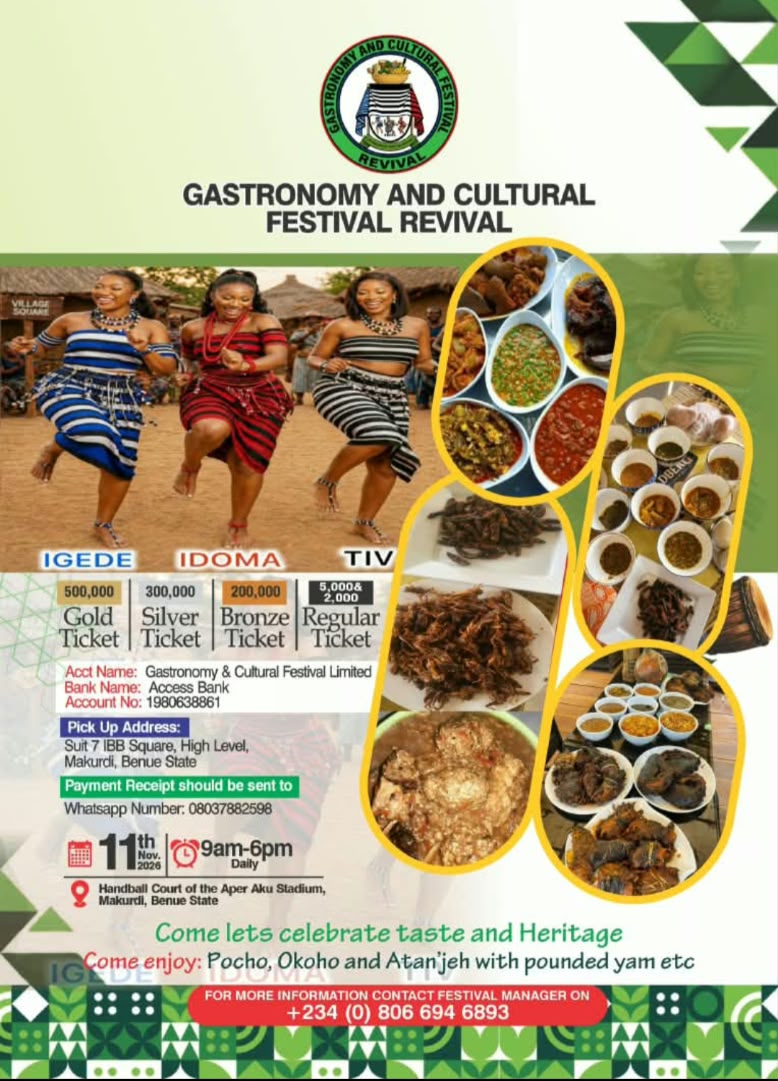
Benue State is set to host the 2026 edition of the “Benue State Annual Gastronomy and Cultural Tourism Festival”, an initiative designed to promote the state’s rich culinary heritage, culture, agriculture, arts and tourism potential.
The festival, according to the organisers, is expected to provide a major platform for transforming Benue’s agriculture, food, fashion, cultural and tourism sectors into commercially viable industries capable of generating employment, attracting investment and creating new business opportunities.
The Festival Manager and Secretary-General of the Benue State Gastronomy and Cultural Tourism Festival Group, Mr. Jonathan Justin Akem, said the event would bring together indigenous cuisine, cultural performances, arts, music, crafts and other creative tourism attractions to create a major marketplace for local products and talents.
Akem explained that the festival would also enhance the visibility of Benue’s cultural heritage and position the state as a major destination for gastronomy and cultural tourism in Nigeria.
He noted that the event could create opportunities for farmers, food processors, chefs, caterers, restaurants, hotels, artisans, entertainers, tour operators and young entrepreneurs to showcase their products and services while connecting with new markets.
According to him, the festival would further encourage the commercialisation and preservation of traditional Benue cuisines and create stronger markets for locally produced agricultural products.
He added that the initiative was not only about food and entertainment but also about using culture and tourism as instruments of economic development.
Beyond Benue State, Akem said the festival was expected to contribute to the growth of Nigeria’s tourism economy by showcasing the country’s cultural diversity and encouraging domestic and international tourists to explore its food, traditions and tourist destinations.
He expressed optimism that with sustained annual editions, strategic partnerships and effective promotion, the festival could evolve into a major platform for job creation, investment, cultural preservation, tourism development and economic growth.
Akem said the long-term objective was to change the perception of food and culture from being merely aspects of tradition to valuable economic assets capable of creating livelihoods, attracting visitors and promoting Benue and Nigeria to the global Community.
Describing Benue as the “Middle Belt heartland” and “food basket of the nation,” he invited Nigerians and tourists to visit the state to experience its diverse cuisine and cultural heritage.
“Come, eat and enjoy Benue’s rich food, where over five different types of soups are served in a meal, while you meet and interact with very hospitable people whose faces are always filled with permanent smiles,” he said.
He described the festival as an opportunity for visitors to experience the richness of Benue’s food, culture and hospitality.