By Oboh Linus, Lafia
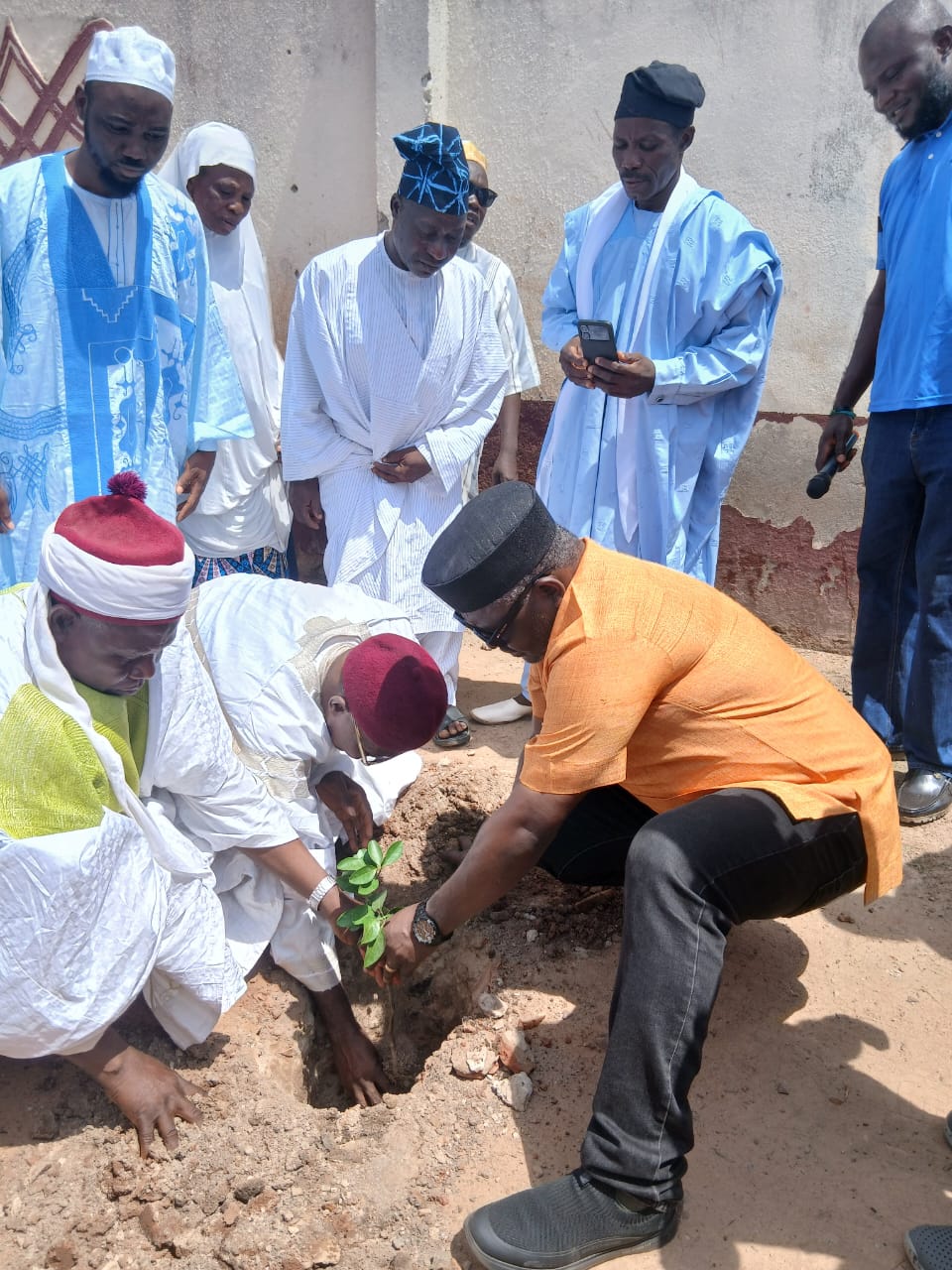
The Global Initiative for Food Security and Ecosystem Preservation (GIFSEP) has launched a tree-planting campaign and urban gardening initiative for Persons with Disabilities (PWDs) in Nasarawa State.
The official launch took place at the Palace of the Sangeri of Shabu, on Friday in Shabu Development Area of Lafia, the Nasarawa State Capital.
The Two-day programme, which began on June 18, was organised to mark World Environment Day 2026 and was supported by the Embassy of France in Nigeria.
Speaking at the event, Dr Michael David, GIFSEP Executive Director said the campaign highlights community ownership of ecosystem restoration.
He described tree planting as a practical, cost-effective nature-based solution to climate change, land degradation, biodiversity loss, and food insecurity.
“Tree planting is not just about putting seedlings in the ground. It is about restoring degraded landscapes, protecting livelihoods, securing our food systems, and safeguarding the future of generations yet unborn.
“Climate change affects everyone, and climate action is everybody’s responsibility. We must all become custodians of nature,” David said.
David noted that the project is part of GIFSEP’s #Food4PWDs Campaign, which targets food security and climate resilience for persons with disabilities — a group often hardest hit by climate impacts but excluded from adaptation programmes.
He said that under the initiative, PWDs are being trained in urban gardening and given Urban Garden Starter Kits.
“Persons with disabilities are not victims; they are agents of change.
By equipping them with the tools and knowledge to grow food and restore the environment, we promote dignity, strengthen resilience, and ensure that no one is left behind.
“Each kit contains vegetable seeds, seedlings, organic manure, sacks for sack farming, watering cans, and hand tools to help beneficiaries set up home gardens, improve nutrition, and earn extra income.
“As part of the campaign, mango, orange, oil palm, and coconut seedlings are being distributed to PWDs and community members,” he said.
He said additional trees would be planted on farmlands in Agunji, Shabu to promote agroforestry and restore degraded land, noted that the economic trees are expected to boost household nutrition and provide long-term livelihoods.
In her remarks, Margareth Elayo, Commissioner for Environment and Natural Resources, represented by the Director of Climate Change, Mr Umar Sabo, said the State Government under the administration of Gov Abdullahi Sule was committed to land restoration.
“Today is simple but powerful: we are planting hope, one tree gives shade, holds our soil, cleans our air, and secures food for our children. But 1,000 trees together can change a community. They fight the floods, push back the heat, and bring back the rains our farmers need,” Elayo stated.
Responding, the Sangarin Shabu, Alhaji Mahmud Bwala, represented by the Madaki of Shabu, Alhaji Musa Shaibu, expressed appreciation to the GIFSEP and the Ministry of Environment.
Alhaji Bwala, while appealing to the GIFSEP to increase the volume of seedlings distributed to ensure a total ecological transformation of Shabu, noted that the community has institutionalised a strict environmental conservation policy.
“The Ministry of Environment was here sometime and said, ‘To every one tree we cut, there should be three representing it.’ We are aware of it now, and we have been doing it. And that is the reason why next time when you come, you will see something different,” he said. (NAN)